


 back to all news
SEAS master’s student team develops tools for Indigenous-led wildlife conservation and grasslands policy in the Northern Great Plains
Image

Caption
SEAS master’s project team members on a butte near Rocky Boy’s Reservation. Photo credit: Buffalo Nations Grasslands Alliance
Introduction
Grasslands cover roughly 40% of Earth’s land surface, yet around 62% have been lost due to agricultural conversion, industrial development and spread of invasive species. In the Northern Great Plains (NGP) ecoregion of the United States, 80% of Tribally-managed lands are native grasslands, highlighting Native Nations’ prominent role in grasslands stewardship.
Our research supports the Buffalo Nations Grasslands Alliance (BNGA), a Native-led nonprofit supporting conservation and sustainable livelihoods across 16 Native Nations in the NGP ecoregion. Collaborating with BNGA, we piloted two conservation tools at Rocky Boy’s Reservation in Montana:
- A connectivity tool for pronghorn (Antilocapra americana) to identify and protect wildlife habitat areas, and
- An artificial intelligence (AI)-based bison wallow detection tool to support monitoring of bison activity and pathways for restoration.
We also evaluated the proposed North American Grasslands Conservation Act (NAGCA), which would provide dedicated funding for grasslands conservation, including 10% (~$9.2 million annually) set aside for Native-led initiatives. Our analysis identified strategies to strengthen the bill’s appeal to policymakers and potential for uptake by stakeholders.
Methods
Assessing Ecological Connectivity for Pronghorn
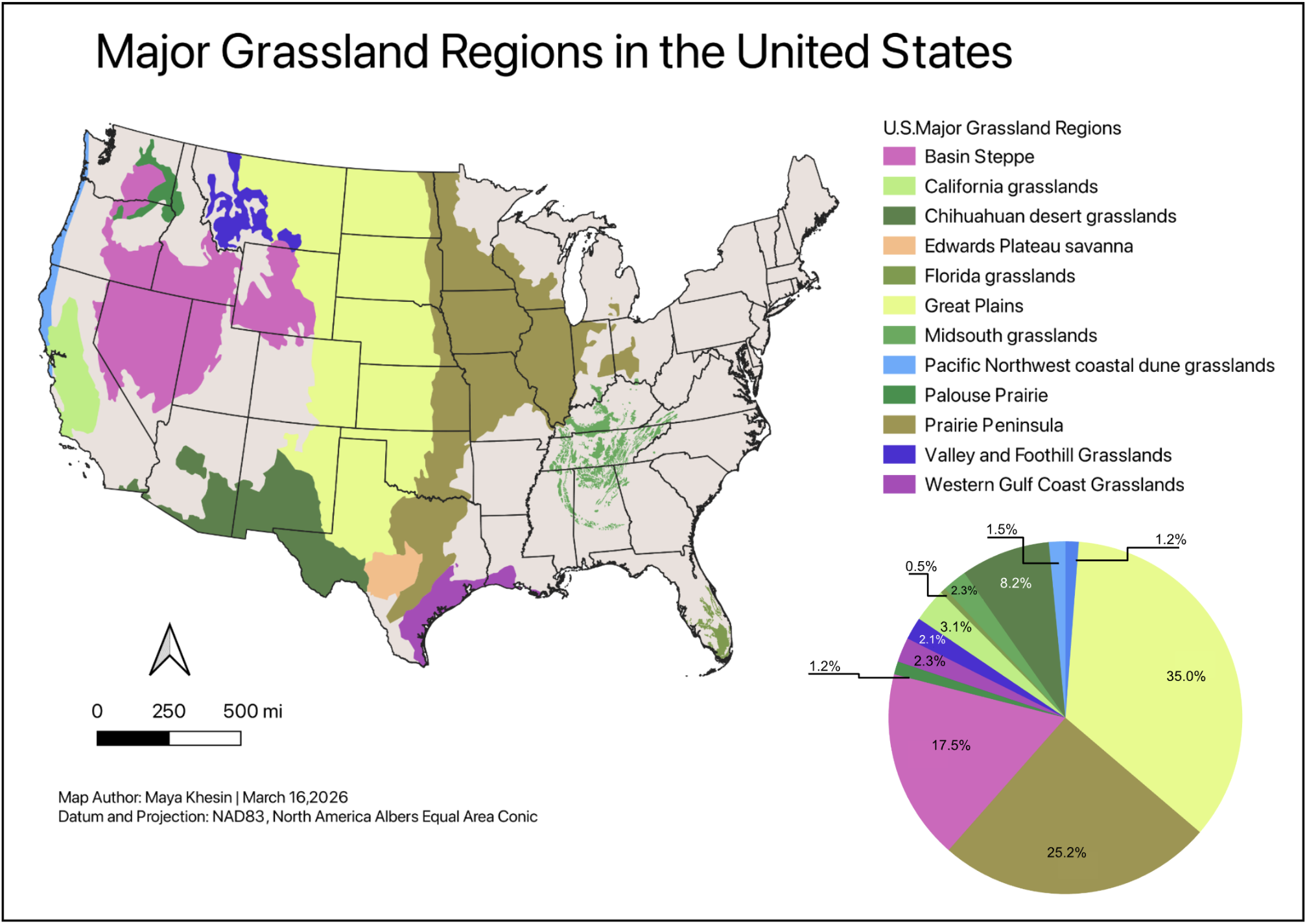
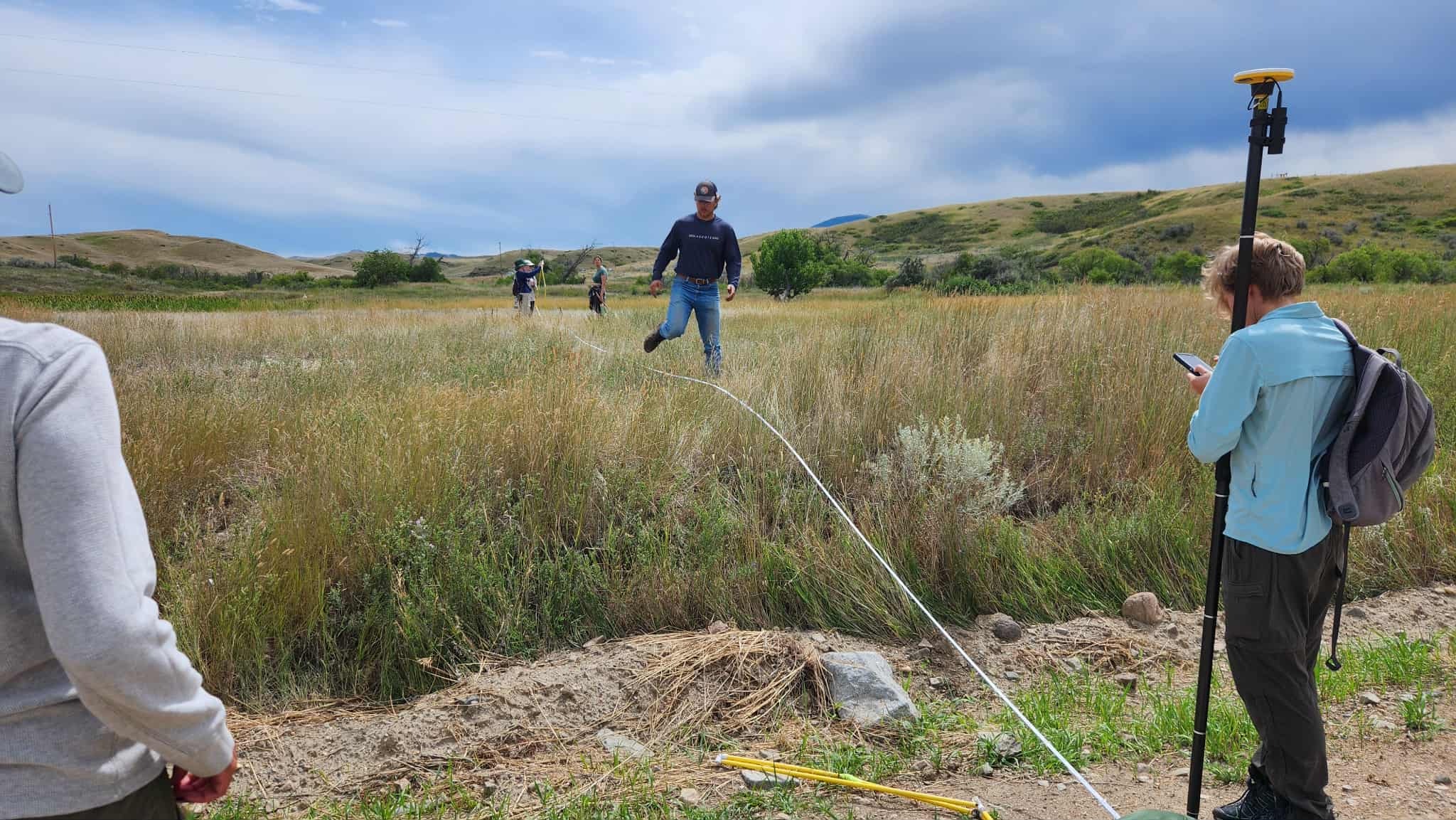
Ecological connectivity describes how easily wildlife move across landscapes, and is an indicator of habitat quality. In alignment with BNGA’s goal to establish paths of connectivity across the NGP ecoregion, we reviewed existing connectivity metrics, developed a protocol for ground-truthing geospatial data (assessing the accuracy of satellite data through field-based data collection), and assessed pronghorn habitat suitability at Rocky Boy’s Reservation.
We selected pronghorn as a priority species after learning of its significance to BNGA and their partners, as well as its role as an indicator of grassland health. The connectivity and ground-truthing protocols we developed can be modified to gather data on other grassland areas and assess habitat quality for other species.
Identifying Ecosystem Enhancement Impacts from Bison Restoration
North American bison is a sacred relative and traditional food source for many Native Nations, as well as an ecologically important species in North American grasslands. During westward expansion, settlers intentionally culled bison herds to decrease Native Nations’ sovereignty and subsistence capacity, resulting in the near extinction of the species. Recently, numerous Native Nations have initiated efforts to restore bison populations.
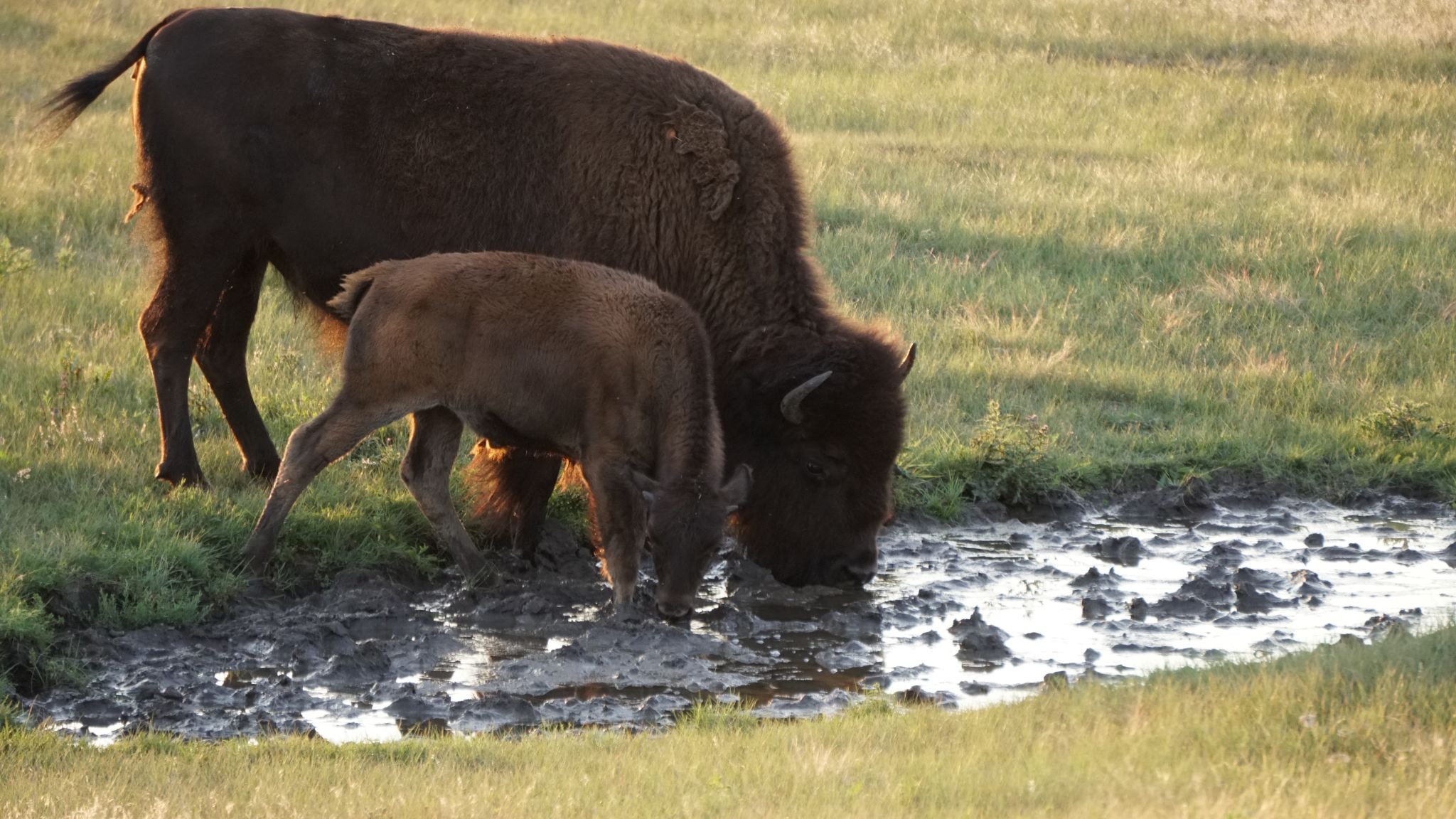
To support monitoring needs associated with Tribal bison restoration programs, we developed AI models to determine ecosystem impacts from bison activity. We focused on bison’s wallowing behavior, which consists of stamping, rolling, horning, and rumbling that create ground depressions of bare earth. These patches, known as wallows, enhance landscape complexity and species diversity. By identifying bison wallows in remotely-sensed data, these models have the potential to significantly reduce fieldwork needs for monitoring bison impacts on the landscape.
Policy Recommendations for the North American Grasslands Conservation Act
The proposed NACGA would allocate approximately $9.2 million annually for a flexible, incentive-based grassland conservation and restoration grant program. BNGA has endorsed the bill, which includes a provision setting aside 10% of funds for Native-led projects.
Our policy analysis drew on conversations with BNGA staff and members of the Rocky Boy Buffalo Project, as well as an economic assessment of U.S. grasslands, and a review of existing conservation legislation. As one of our final products, we created a quantitative tool that outlines financing strategies for NACGA.
Key Results
- A preliminary habitat suitability analysis of pronghorn connectivity for Rocky Boy’s Reservation and neighboring counties, which shows potential for pronghorn habitat restoration;
- Two preliminary AI models capable of identifying bison wallows with satellite imagery, reducing monitoring time and costs; and
- Recommendations for implementing NAGCA, including:
- Increasing the federal land leasing rate for grazing to finance NACGA;
- Establishing standardized grassland performance metrics to evaluate NAGCA-funded projects; and
- Simplifying the NAGCA grant application process and providing technical assistance to applicants.
Conclusion
Through a combination of Indigenous knowledge, geospatial technology and policy analysis, this project highlights opportunities to strengthen ecological connectivity, bison restoration and advance Tribal-led conservation across the Northern Great Plains ecoregion.
Native Nations have stewarded grassland ecosystems for thousands of years, and will continue to lead in the conservation space. Indigenous-led stewardship—supported by sustained public investment—can shape the future of grasslands in the NGP ecoregion and ensure that these ecosystems remain for generations to come.