


Inventory and Monitoring for Biodiversity Conservation
Matthaei Botanical Gardens and Nichols Arboretum, Washtenaw County, MI
Project Description
The Ecological Inventory and Monitoring capstone team worked at Matthaei Botanical Gardens and Nichols Arboretum (MBGNA) to gather data critical to successful land management. Land managers often cannot afford the time or resources to monitor the effects of stewardship actions, such as prescribed burns or native plantings. This project addresses informational gaps in MBGNA’s land stewardship through an extensive summer of ecological inventory and monitoring. The data and analysis will be used to improve land management decision-making to promote high-quality native ecosystems. Our project included four components: inventorying moths and butterflies, monitoring invasive plant species, planting and monitoring oak seedlings to assess oak regeneration, and conducting a prairie botanical survey.
Year
2026
Project Status
In Progress
Client Organization
Matthaei botanical Gardens and Nichols Arboretum
Students Involved
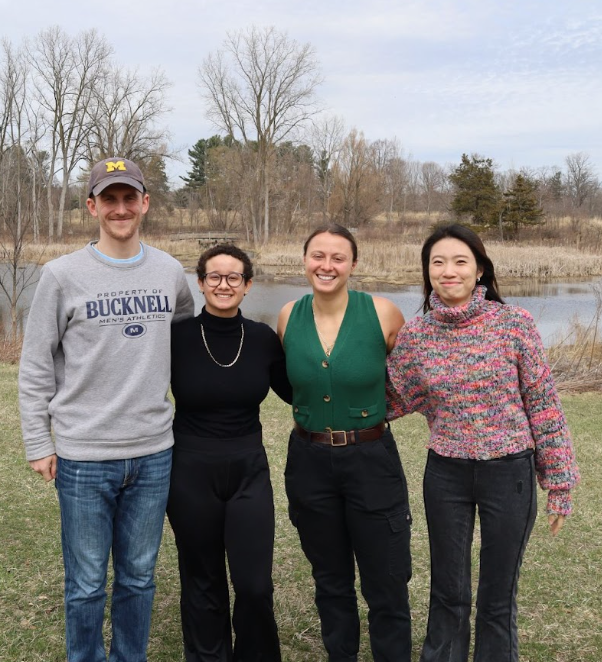
Brendan Arnold, Alexandra Audia, Linnea Lyons, Siyu Luo
SEAS Faculty Advisor
Final Report
Project Components: Summary
Executive Summary
As threats to native ecosystems increase, ecological monitoring has become increasingly important to help preserve biodiversity. For biodiversity conservation to be most effective, land managers need to be aware of the species that occur on their lands and the effects of their management on these species. Additionally, biological inventories describe the current state of ecosystems and provide land managers with the necessary information to develop ecological management strategies. Inventory and monitoring are key components of the adaptive management framework. To assist Matthaei Botanical Gardens and Nichols Arboretum (MBGNA) in improving their existing ecological inventory and monitoring practices, we focused on five key areas during the 2025 field season, including: Lepidoptera inventory, herbaceous invasive monitoring and management, woody invasive and native monitoring, oak regeneration, and a prairie floristic quality assessment.
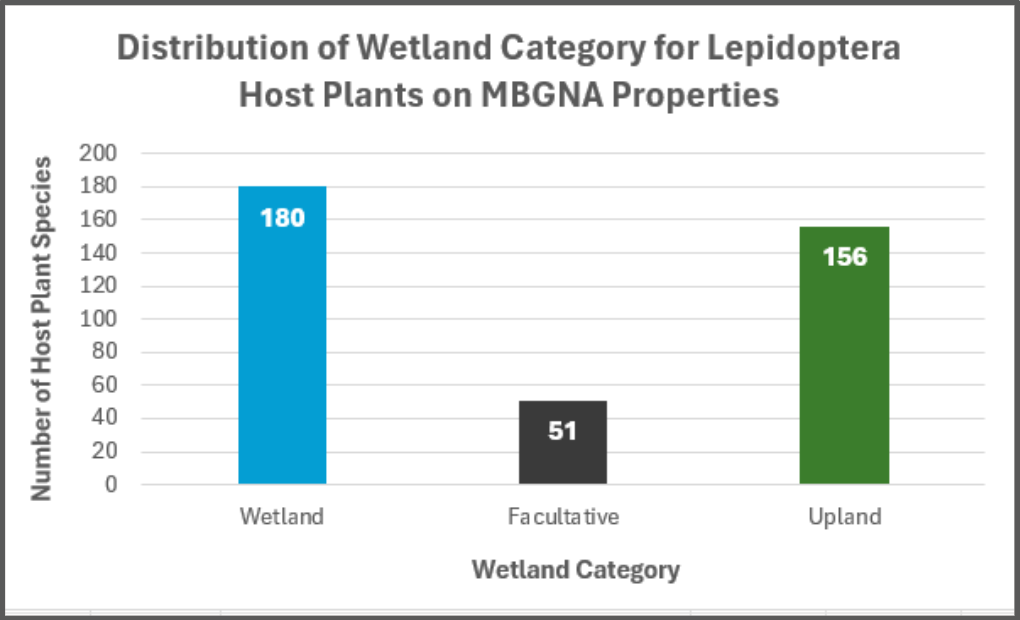
This study introduces a comprehensive Lepidoptera inventory and baseline ant survey conducted within Matthaei Botanical Gardens and Nichols Arboretum (MBGNA). Through hosting six community science bioblitz events, organizing four independent expert-led surveys, and compiling historical datasets, we documented 6,546 total Lepidoptera observations, including 347 unique species across all MBGNA properties. These data show a strong association between Lepidoptera presence and wetland-affiliated plant communities, which collectively supported over half of the identified Lepidoptera-host plant relationships. Additionally, ant mound surveys were conducted in Dow Field within Nichols Arboretum to provide baseline data for evaluating the impacts of ecological restoration practices such as prescribed burns on insect biodiversity and associated ecosystem functions.
To help improve adaptive management, we conducted ecological monitoring and experimentation in wetlands at MBGNA. Anthropogenic changes have degraded wetlands and made them more vulnerable to invasive plant species. Typha x glauca (hybrid cattail) is a prevalent invasive species in southeastern Michigan and degrades wetland ecosystems. Through experimentation, we sought to demonstrate that repeat-cutting is an effective method for Typha control. We conducted a two-year repeat-cut experiment, with four monthly above-ground cuttings each growing season, and found that cutting for a second consecutive year resulted in a sharp decrease in Typha stems per plot and average stem height. From this, we conclude that repeated cuts are an effective method to reduce Typha density. A second pilot experiment is in progress, examining methods of Typha control, comparing the effectiveness of an herbicide treatment with a cut-and-herbicide treatment. In addition, comprehensive monitoring of Typha was conducted throughout the summer to document Typha presence. To further support MBGNA land management planning, the genetic identity of five stands of Phragmites was determined, confirming the presence of the invasive subspecies in three locations. Lastly, a stewardship abstract was developed for Ficaria verna (lesser celandine) to provide guidance on its control.
To address invasive species pressure and support native plant recovery, we evaluated ecological monitoring efforts conducted at MBGNA, with a dual focus on woody invasive species and native woody regeneration along Fleming Creek. Invasive monitoring targeted high-priority wetland conservation areas, with specific emphasis on common buckthorn (Rhamnus cathartica). Findings indicate that while mechanical treatment utilizing heavy machinery is effective at removing mature individuals, it also frequently stimulates rapid regeneration from both the suppressed seedbank and root reserves. Results support the need for an integrated management approach to invasive species removal, such as combining mechanical removal with targeted chemical application and subsequent short-term, intensive follow-up treatments. Monitoring of native woody vegetation along Fleming Creek revealed limited seedling establishment and a greater prevalence of resprouts, particularly among species such as dogwoods and hazelnut. This reduced native woody regeneration can likely be attributed to multiple interacting ecological pressures, including competition from invasive species and increased herbivory by white-tailed deer. Additionally, the return of the North American beaver to Fleming Creek may result in deer-beaver herbivory interactions, leading to a high-impact, positive feedback loop that promotes the continued suppression of native woody plant growth. These findings emphasize the importance of implementing management strategies that promote native plant recovery along riparian areas, such as native plantings, protective caging, and continued long-term monitoring.
To better understand the factors limiting oak regeneration, we conducted continuous monitoring of oak regeneration processes in the oak–hickory forests of Nichols Arboretum. Due to changes in disturbance patterns, browsing by herbivores, and increased competition from shade-tolerant tree species, forests across the eastern United States are widely facing the problem of oak regeneration failure. Launched in 2023, this research evaluates key ecological factors affecting oak regeneration. In 2025, our team planted oak seedlings in forest canopy gaps and installed fences, cages, and root protection structures to reduce the impacts of herbivory. Results indicate that survival rates in 2025 (83%) were notably higher than those planted in 2024 (13%). Mortality in both years was primarily associated with physical disturbance consistent with small mammal activity. Future management should focus on addressing constraints in the transition from seedling to sapling stages, while comprehensively considering animal disturbance, understory competition, and light conditions, and incorporating disturbance recovery measures such as competition control and prescribed burning.
Tallgrass prairies are fire-dependent ecosystems that are often dominated by Andropogon gerardii (big bluestem). Due to factors such as fire suppression, tallgrass prairies are threatened in the Midwest. Dow Field undergoes 3-year rotational fall, spring, and summer prescribed burns to combat invasive species and encourage native species biodiversity. However, there is a lack of monitoring to assess whether the burning is working for its intended purpose to promote biodiversity and ecological resilience. Our team therefore used the floristic quality assessment method and a systematic random sampling protocol to collect species and cover-class data and to assess plant species diversity and abundance within Dow Field. Our results indicate that the abundance of Andropogon gerardii has a weak negative correlation with species richness at the plot level. Additionally, summer burns may have a more positive effect on species richness, while other seasonal burns may need to shift to combat the overabundance of Andropogon gerardii. Overall, our research underscores the importance of ecological inventory and monitoring and provides recommendations to improve restoration outcomes and biodiversity conservation for managed natural areas within MBGNA.
Inventory: Moths and Butterflies (Lepidoptera)
With assistance from the Washtenaw Bird and Nature Alliance (WBNA), project members facilitated six moth and butterfly community bioblitz events on MBGNA properties during the 2025 summer season to assess Lepidoptera diversity. The inventory data, along with research-grade observations from iNaturalist, were then used in conjunction with existing plant inventory data to determine The presence and ecological distribution of Lepidoptera host plants at Matthaei Botanical Gardens and Nichols Arboretum.
Monitoring Non-Native Herbaceous Plants
Project members focused on three non-native invasive species prevalent in wetland ecosystems. These included a survey of Ficaria verna (Lesser celandine), mapping and experimental management of Typha x glauca (hybrid cattail), and submitting genetic samples of Phragmites australis subsp. australis for lineage confirmation. Together, this work supports data-driven decision-making to improve management strategies aimed at promoting native plant communities.
Experimental Cattail Cutting Results:
Repeated cutting dramatically reduces the abundance of cattail over time.
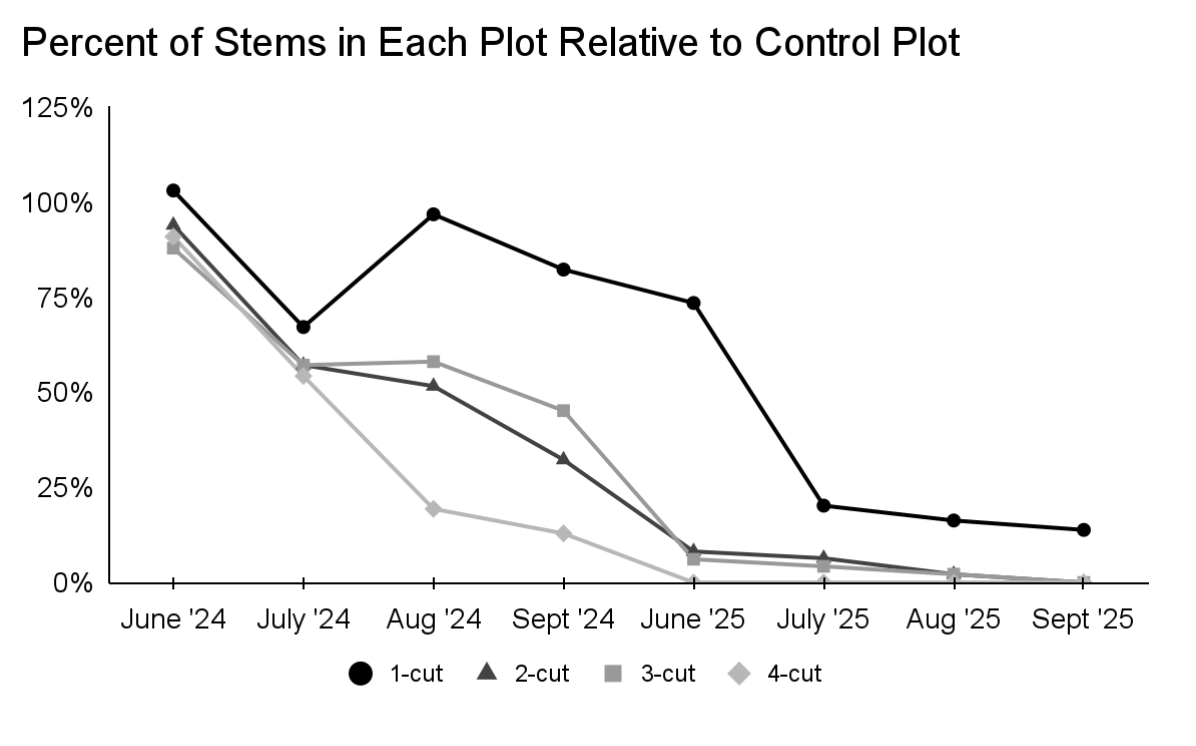
Number of stems per plot shown as a percentage of the number of stems in the control plot.
Monitoring of Native and Invasive Woody Species Regeneration
Project members collected annual monitoring data during the 2025 field season for native woody plant species along a narrow riparian buffer zone of Fleming Creek, and concerning invasive woody species. Invasive plant monitoring was especially focused on common buckthorn (Rhamnus cathartica) within higher-priority conservation zones at Matthaei Botanical Gardens. Further analysis of this data, in combination with past and future monitoring results, will provide key insights into ecological restoration methods and inform conservation management decisions at both an organizational and community level.
Oak Regeneration at Nichols Arboretum
Project members aim to assist in the regeneration of oak-hickory forest in University of Michigan-owned properties at the MBGNA. The data collected for this project include three forests in Southeastern Michigan, with most data collected in Nichols Arboretum’s East Oak Woodlands. The oak regeneration project integrates long-term monitoring with experimental management practices to implement adaptive restoration under real conditions, promoting the advancement of white oak, black oak, and red oak seedlings, saplings, and understory trees into the next growth stages. The oak regeneration project was initiated in 2023 and has since been carried out each summer by ecological monitoring interns who implement field protocols in response to results from the previous years. Based on annual inventories and monitoring records, appropriate forest management decisions are developed to support and restore oak regeneration across MBGNA lands.
Floristic Assessment of Dow Prairie
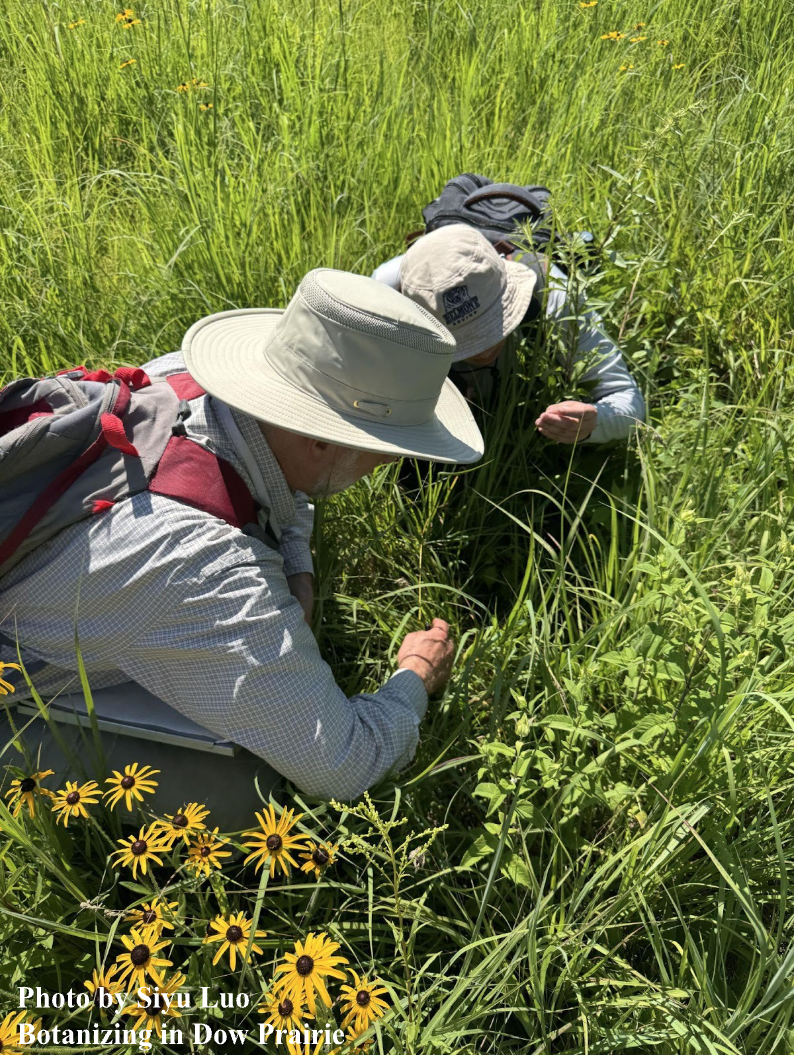
Project members conducted a botanical survey at Alex Dow Field in Nichols Arboretum. Under the management of MBGNA, this tallgrass prairie undergoes fall, spring, and summer prescribed burns to combat invasive species and encourage native species biodiversity. However, there is a lack of monitoring efforts to analyze whether the burning is working for its intended purpose to promote biodiversity and ecological resilience. Our team therefore performed a floristic quality assessment within the site to assess plant species biodiversity and abundance within each of the prairie’s burn units. Our study provides a baseline for understanding the potential effects these prescribed burns have on the plant community of Dow Field.
Conclusions
Overall, our research contributes to ecological inventory and helps MBGNA better understand the species that occur on their lands, which enables better decision-making to improve biodiversity conservation. Our inventories will provide insight into the best-suited management actions to protect and preserve vulnerable species and ecosystems. Furthermore, Lepidoptera and ant inventories provide baseline information for MBGNA to continue successful restoration efforts. Our research provides suggestions for the implementation of future management strategies and emphasizes areas that should be prioritized for continued monitoring efforts. From our collected data, MBGNA can better establish a long-term monitoring protocol in their natural communities to detect ecological changes, maximize the efficiency of management practices, and increase biodiversity conservation. We recommend continued ecological monitoring, which provides valuable insights into changes in ecosystem function and offers a framework for determining whether management practices benefit target species.
Why Inventory and Monitoring Matter
Despite the apparent beauty of Matthaei Botanical Gardens and Nichols Arboretum, the ecosystems within face increasing ecological threats. Ecological inventory provides a rapid assessment of habitat quality and helps inform management decisions aimed at improving ecosystem health. Ongoing monitoring and annual reassessment are essential to evaluate whether management strategies are effective and help MBGNA land stewards refine management approaches based on empirical data. Inventory and monitoring guide future lan
Field Work Images

Community members observing moths at MBGNA
Image taken by Catherine Seguin (MBGNA)

Researchers Ally Audia and Brendan Arnold removing cattail from experimental plots

Mike Kost and Linnea Lyons entering Dow field study site

Advisor Mike Kost, installing a chicken-wire cage with in oak-deer exclosure

Project members Roserain Luo and Ally Audia installing deer protection and watering newly planted oak seedling

Grape Leaffolder (Desmia funeralis) observed by Linnea Lyons at a WBNA moth night at Matthaei Botanical Gardens

Brendan Arnold
MS Ecosystem Science and Management
Brendan contributed to monitoring non-native herbaceous species, particularly non-native Typha species. He also led the second year of a repeat-cut experiment aimed at managing invasive Typha without herbicide. Additionally, to inform MBGNA land managers of the identity of Phragmites species, he initiated efforts to determine the genetic identity of stands of Phragmites. Lastly, he developed a stewardship abstract for Ficaria verna (lesser celandine) to provide guidance on its control.

Ally Audia
MS Ecosystem Science and Management
Ally contributed to monitoring efforts through adding and updating invasive species distribution data, with an emphasis on common and glossy buckthorn populations, to existing GIS records on Matthaei Botanical Gardens and Nichols Arboretum properties. She also recorded inventory data for native woody plants occurring along Fleming Creek to initiate efforts in evaluating white-tailed deer and beaver site impacts on botanical gardens property. Ally is passionate about ecological restoration and promoting biodiversity conservation in her home state of Michigan.

Siyu Luo (Roserain)
MS Ecosystem Science and Management
Siyu specialized in oak regeneration research within the Nichols Arboretum. Her work focused on evaluating the effects of herbivory and physical disturbance on seedling survival through experimental planting and protective treatments. She designed and implemented adaptive management strategies, including refined cage structure and root protection methods, which significantly improved the seedling survival in 2025. Additionally, Siyu conducted detailed monitoring of seedling growth, disturbance patterns, and site condition using GIS-based tools, contributing to long-term restoration planning. She aims to advance ecological restoration practices by integrating field experimentation, data-driven decision making, and ecosystem resilience strategies.

Linnea Lyons
MS Ecosystem Science and Management; Behavior, Education, and Communication
Linnea specialized in performing a botanical survey and floristic quality assessment in Dow Field, a prairie community located in Nichols Arboretum and currently managed with prescribed fire. She provided baseline monitoring data to evaluate whether the frequency and seasonality of prescribed burns are working toward their intended effect of promoting biodiversity and ecological integrity within the prairie. Additionally, she and her team contributed to MBGNA’s iNaturalist database of butterflies and moths to determine native plantings that support this biodiversity. Linnea strives to build bridges between ecological restoration, biodiversity conservation, and environmental education.