


 back to all news
SEAS, EGLE collaborate on new report seeking input on MI Healthy Climate Plan
Image

The results of a collaboration between the University of Michigan School for Environment and Sustainability (SEAS) and the Michigan Department of Environment, Great Lakes and Energy (EGLE) seeking input from partners about the MI Healthy Climate Plan are available in a new report that was published to coincide with the 2026 MI Healthy Climate Conference.
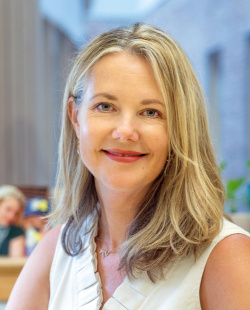
The report, “From Listening to Leadership: Convening Results from EGLE and U-M SEAS Collaboration,” was co-authored by Liesl Clark, SEAS director of climate action engagement; Tony Reames, SEAS associate professor and Tishman Professor of Environmental Justice and director of the SEAS Detroit Sustainability Clinic; and SEAS master’s student Vamika Jain (MS/MBA ’26).
Clark and Reames worked with EGLE’s Office of Climate and Energy (OCE) to organize, host and facilitate a series of engagement meetings with partners from environmental justice communities, NGOs, local governments and the private sector to gather feedback about how the state should achieve its decarbonization goals set forth in the MI Healthy Climate Plan.
“The goal was to ensure as many voices as possible helped shape Michigan’s path forward, including starting and ending the meeting series centered on equitable and just climate action,” Reames said.
The MI Healthy Climate Plan is a comprehensive strategy for Michigan to reach economy-wide carbon neutrality by 2050, focusing on reducing greenhouse gas emissions by 52% by 2030. The plan has six pillars: environmental justice, clean energy, electrified transportation, building decarbonization, industrial innovation and land/water protection.
“The state of Michigan, supported by SEAS, took a comprehensive look at all of the different segments of the economy to inform how to prioritize our next steps in reducing greenhouse gas emissions,” said Clark. “During this round of climate planning, EGLE sought feedback around the grid, buildings, industry, transportation and lands. We were instrumental in supporting this effort as EGLE drafted the Comprehensive Climate Action Plan.”
Clark and Reames conducted in-person engagement meetings over a 15-month period between October 2024 and January 2026. More than 500 people attended the meetings, which were held in Ann Arbor, Detroit and Lansing. Additional feedback was provided through virtual public engagement sessions.
“There were many different voices represented, and I’m proud that we were able to help EGLE have access to important thinking to help frame how they take their next steps,” Clark said.
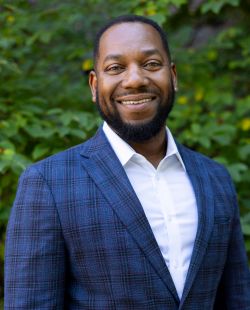
The report summarizes major insights about the six pillars of the MI Healthy Climate Plan that were gleaned from the engagement sessions, including an analysis of what participants identified as major barriers to overcome, the role the state can play, and pathways forward.
At April’s MI Healthy Climate Conference, Clark reprised a panel from 2024 on climate planning. The panel of experts from the state, regional councils and Tribal nations highlighted the importance of planning to lay a foundation for implementation, how those plans make a difference for people, and discussed improving steps to engage partners. Clark also spoke about the knowledge presented in the report.
SEAS has been at the forefront of climate planning for the state since the MI Healthy Climate Plan was first in development. Not only was Clark the director of EGLE, the chair of the Council on Climate Solutions and led the writing of the plan, SEAS Dean Jonathan Overpeck, SEAS Associate Professor Sam Stolper and SEAS alumna Kerry Duggan (MS ’06) all serve on Michigan Gov. Gretchen Whitmer’s Council on Climate Solutions, an advisory group that oversees the implementation of the MI Healthy Climate Plan. Reames was a member of the five-member Climate Justice Brain Trust that helped guide OCE’s initial work in identifying barriers that impede environmental justice communities from realizing the benefits of the energy sector’s transition to cleaner energy sources. He is also vice chair of the Michigan Advisory Council on Environmental Justice.
“SEAS has played a critical role in supporting the state of Michigan in developing the implementation of its climate plan,” says Clark. “That’s important because when you build the plan, it creates the roadmap for how the dollars get spent. And SEAS’ role in elevating action-oriented, people-oriented and justice-oriented solutions means that when we get to the implementation phase, we have implementation steps that are framed by SEAS.”