


 back to all faculty
Dani Jones
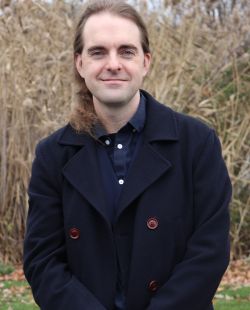
Associate Research Scientist; Research Faculty Member
Research Faculty Member
Geospatial Data Sciences
Climate + Energy
Water
Cross-cutting

Office
NOAA Great Lakes Environmental Research Laboratory
Lab website
About
Dr. Dani C. Jones is a Research Faculty Member at the Cooperative Institute for Great Lakes Research (CIGLR) (https://ciglr.seas.umich.edu/) within the School for Environment and Sustainability (SEAS) at the University of Michigan. They serve as the founder and lead of the Great Lakes Artificial Intelligence Laboratory (Great Lakes AI Lab), where their research program focuses on data science, machine learning, and artificial intelligence applied to physical limnology, weather forecasting, water cycle predictions, and observing system design.
The overarching goal of Dr. Jones's research program is to advance societal adaptation to climate change impacts, including coastal, riverine, and urban flooding. Prior to joining SEAS, Dr. Jones was a Physical Oceanographer and UKRI Future Leaders Fellow at the British Antarctic Survey (https://www.bas.ac.uk/). Their foundational oceanographic background includes expertise in adjoint modeling for comprehensive sensitivity analysis and unsupervised classification for large geophysical datasets, with regional focus spanning the Laurentian Great Lakes, North Atlantic, and Southern Ocean.
Publications
Jones, D. C., Liu, J., Steinschneider, S., Fry, L. M., et al. (2026). A Community-centered Vision for Data-Intensive Great Lakes Research and Management. Artificial Intelligence for the Earth Systems. (https://doi.org/10.1175/AIES-D-25-0096.1)
Jones, D. C. and Coauthors (2025). Mapping out how machine learning and artificial intelligence will change Great Lakes observations, modeling, and forecasting in the coming decade. Bulletin of the American Meteorological Society, 106, E378–E385. (https://doi.org/10.1175/BAMS-D-24-0304.1)
Jones, D. C., Sonnewald, M., Zhou, S., et al. (2023). Unsupervised classification identifies coherent thermohaline structures in the Weddell Gyre region. Ocean Science, 19, 857–885. (https://doi.org/10.5194/os-19-857-2023)
Andersson, T., Hosking, J. S., Perez-Ortiz, M., ..., Jones, D. C., et al. (2021). Seasonal Arctic sea ice forecasting with probabilistic deep learning. Nature Communications, 12, 5124. (https://doi.org/10.1038/s41467-021-25257-4)
Research
Dr. Jones integrates data science, machine learning, physical limnology, and oceanography to address critical hydroclimate and oceanographic challenges:
- Data-Driven Observing System Design: Developing probabilistic deep learning frameworks (such as convolutional Gaussian neural processes) to optimize sensor placement and environmental monitoring networks across the Great Lakes.
- Hydroclimate & Water Level Forecasting: Building data-driven subseasonal-to-annual predictive tools for Great Lakes net basin supply, water level fluctuations, and extratropical storm impacts.
- Unsupervised Learning & Ocean Dynamics: Applying Gaussian mixture modeling and ocean state estimation to classify thermohaline structures, detect ocean fronts, and analyze climate model sensitivity in polar and subpolar oceans.
Accolades
UKRI Future Leaders Fellowship, UK Research and Innovation (2020–2023)
Laws Prize, British Antarctic Survey (2021)
Going the Extra Mile (GEM) Award, British Antarctic Survey (2020)
Education
Ph.D. Atmospheric Science (Oceanography), Colorado State University (2013) (https://www.atmos.colostate.edu/)
M.S. Mathematical Sciences, Georgia Southern University (2009)
M.S. Physics, University of Kentucky (2007)
B.S. Physics, Georgia Southern University (2005)
Affiliations
Cooperative Institute for Great Lakes Research (CIGLR), University of Michigan (https://ciglr.seas.umich.edu/)
Associate Editor, Artificial Intelligence for the Earth Systems (https://www.ametsoc.org/index.cfm/ams/publications/journals/artificial-intelligence-for-the-earth-systems/)
Member, Observing System Design Working Group, Southern Ocean Observing System (SOOS) (https://soos.aq/)
Honorary Researcher, British Antarctic Survey, NERC, UKRI (https://www.bas.ac.uk/)
Senior Member, Darwin College, University of Cambridge (https://www.darwin.cam.ac.uk/)
Affiliate Faculty, Department of Mathematical Sciences, Georgia Southern University
