• Admissions
  • Exploring Grad School
  • Current Students
  • Community Impact and Engagement
  • Faculty + Staff
  • Alumni
Give
Intranet
Request Info
Home
  • Academics
    • Master of Science
    • Master of Landscape Architecture
    • Doctoral (PhD)
    • Dual-Degree Programs
    • Graduate Certificate Programs
    • Undergraduate Program
    • Courses
    • Online Learning
  • Research + Impact
    • Sustainability Themes
    • PhD Profiles
    • Student Research
    • The Centers, Institutes + Initiatives
    • Faculty Profiles
    • Labs
  • Prospective Students
    • Why Michigan?
    • Application Information
    • International Students
    • Financial Aid + Tuition
    • Visit Campus
    • Faculty Profiles
    • Admitted Students
    • Application Success Webinars
  • Student Services
    • SEAS and PitE Student Center
    • Career Services
    • Financial Aid
    • Academic Advising
    • Student Organizations
    • Student Development
    • Forms, Handbooks + Policies
    • Quick Links
  • News
    • Community Highlights
    • In the Media
    • Stewards Magazine
  • Events
    • Co-Sponsorship Form
    • Submit Event
    • Admissions Webinars
    • Gallery
  • About
    • Who We Are
    • SEAS Values
    • Collective Impact Committee
    • Leadership
    • Demographics
    • Faculty Profiles
    • Administrative Departments + Staff
    • Facilities + Locations
    • Community Impact and Engagement
    • Art & Environment Gallery
    • COVID-19
    • Land Acknowledgement
    • History
    • Email Sign-Up
Search search icon
  • Admissions
  • Exploring Grad School
  • Current Students
  • Community Impact and Engagement
  • Faculty + Staff
  • Alumni
Give
Request Info
search icon Search

Faculty

Faculty Group 2022
  • Academics
  • Research + Impact
  • Prospective Students
  • Student Services
  • News
  • Events
  • About
    • Who We Are
    • SEAS Values
    • Collective Impact Committee
    • Leadership
    • Demographics
    • Faculty Profiles
    • Administrative Departments + Staff
    • Facilities + Locations
    • Community Impact and Engagement
    • Art & Environment Gallery
    • COVID-19
    • Land Acknowledgement
    • History
    • Email Sign-Up
  • Academics
  • Research + Impact
  • Prospective Students
  • Student Services
  • News
  • Events
  • About
    • Who We Are
    • SEAS Values
    • Collective Impact Committee
    • Leadership
    • Demographics
    • Faculty Profiles
    • Administrative Departments + Staff
    • Facilities + Locations
    • Community Impact and Engagement
    • Art & Environment Gallery
    • COVID-19
    • Land Acknowledgement
    • History
    • Email Sign-Up
  1. Home
  2. ›
  3. Research + Impact
  4. ›
  5. Faculty
  6. ›
  7. Kim C. Diver
back to all faculty

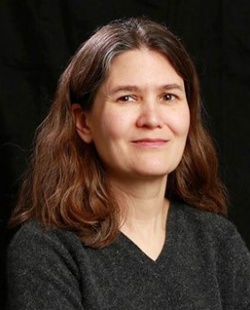
Kim C. Diver

Kim Diver
Lecturer III
Geospatial Data Sciences
Conservation + Restoration
[email protected]
Office
Dana 4034

How to Apply to SEAS Graduate Programs

Explore Graduate School

About

Kim Diver's main research program in island biogeography combines field data and spatial analysis to examine spatiotemporal distributions of plant species. Archipelagoes studied by her research team include islands in the Great Lakes and the tropical Pacific Ocean. Other recent research projects have included the impact of ash decline on migratory songbirds, homeless use of the built environment, and black bear range expansion into exurban landscapes. Dr. Diver has over twenty years of university teaching and research experience prior to joining the University of Michigan.

Publications


  • Kaplan, A.W., Diver, K., Sandin, K.J., & Mill, S.K. 2019. Homeless interactions with the built environment: A spatial pattern language of abandoned housing. Urban Science, 3, 1-15.
  • Diver, K. 2017. Dendrochronological analysis of insular forest stands in relation to climate and water-level fluctuations in the Great Lakes. In Proceedings of the Thirtieth Annual Keck Research Symposium in Geology (R. Varga, ed.), 7 pp.
  • Diver, K. 2014. Potential effects of water-level changes on island ecosystems: a GIS spatiotemporal analysis of shoreline configuration. In Proceedings of the Twenty-Seventh Annual Keck Research Symposium in Geology (R. Varga, ed.), 7 pp.
  • Diver, K. 2013. GIS-based service learning at Wesleyan University: contributing to the quality of open space in South central Connecticut. GeoFocus, 6, 6.
  • Kyne, A. & Diver, K. 2012. Climate change and autumn colors in New England’s forests. The Northeastern Geographer, 4, 34-53.
  • Diver, K. 2010. Beyond area and isolation: forest dynamics and change in plant species richness patterns on islands. Annals of the Association of American Geographers, 100, 1110-1127.
  • Diver, K. 2008. Not as the crow flies: assessing effective isolation for island biogeographical analysis. Journal of Biogeography, 35, 1040-1048.

Education

PhD, Syracuse University (geography)
MA, Syracuse University (geography)
BA, Carthage College (geography, graphic design)

seas logo
University of Michigan
School for Environment and Sustainability
Dana Building
440 Church Street
Ann Arbor, MI 48109
(734) 764-6453
Email us
follow us on facebook
follow us on twitter
follow us on instagram
follow us on linkedin
follow us on youtube
follow us on flickr
planet blue global impact logo
  • Contact us
  • Intranet
  • Contact Web Team
  • Email Sign-Up
  • Report Sexual Misconduct

© 2026 The Regents of the University of Michigan | Privacy Policy

Produced by Michigan Creative