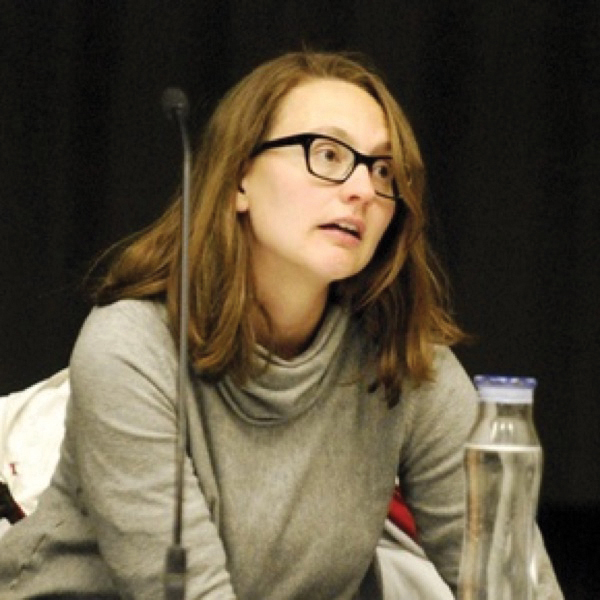
SEAS Assistant Professor Parth Vaishnav poses with SEAS PhD student Mallika Kothari in the Bryant neighborhood in Ann Arbor, where they are studying how residents there cope with power outages of greater than 12 hours. Vaishnav's work is a small slice of a much larger project to make Bryant the nation's first carbon-neutral neighborhood.
Making Ann Arbor’s Bryant Neighborhood a Model for Sustainable Energy
By Julie Halpert |
As climate change leads to hotter temperatures and extreme weather that taxes the electric grid at unprecedented levels and energy sourcing gets caught in political quagmires, those who are struggling financially are even harder hit. University of Michigan School for Environment and Sustainability (SEAS) researchers are working on a groundbreaking federally funded project to better understand the challenges of low-income households and the services they need when the current grid fails. Parth Vaishnav, an assistant professor at SEAS, explains that the grid is undergoing a transition while the climate is changing, which means that the risk of outages will be higher initially. “If the grid goes down, you need to make sure that the effects of that are not catastrophic for people,” he says.
Vaishnav is a co-investigator on the EARNEST Consortium. Anchored at Stanford and funded by the U.S. Department of Energy (DOE), EARNEST is a consortium of 21 universities, including U-M, focused on preparing for a massive energy transition by understanding the current state of the energy sector and developing and testing tools that will help improve electricity grid reliability and resistance.
For the EARNEST project, Vaishnav, together with Mallika Kothari, a SEAS PhD student, is focusing on the Bryant neighborhood in Ann Arbor to understand how residents there cope with power outages of greater than 12 hours. Bryant has set a goal of being the first neighborhood in the country to be carbon neutral—meaning that it will produce in aggregate no greenhouse gas emissions.
Kothari first learned about the project when she was applying to SEAS’ PhD program and met with Vaishnav. Raised in Ann Arbor, she was eager to conduct place-based work in her hometown and appreciates the opportunity “to design energy systems that work with the needs of this community.” Vaishnav is now her advisor, designing the project with her, while she implements it. The goal is to better understand how Bryant residents cope with current long-term power outages and what essentials they’ll need to run if the grid goes down—and how much they are willing to pay for those services. Vaishnav explains that the central goal of the project is to provide input on what residents value to the newly formed Ann Arbor Sustainable Energy Utility (SEU).
Kothari conducted interviews at 49 households. The information will be part of a study they aim to publish by the end of the year. She wants to better understand what people most want powered when the lights go out. This will be followed by a survey where, based on cost, residents will be asked to rank what they’re most willing to pay for, which will help design backup services that are most desired by the residents.
Learning from people’s experiences to inform solutions “is the part I’m excited about,” says Kothari. She sees the project as a blueprint for “big, climate-related problems that we are going to be facing in the future.”
If the grid goes down, you need to make sure that the effects of that are not catastrophic for people.”
Vaishnav explains that there aren’t many studies focused on those with limited resources. “If you’re financially constrained, then your answer may be different from someone who is not,” so this work will “generate new knowledge that doesn’t exist.”
Missy Stults (PhD ’16)
SEAS alumna Missy Stults (PhD ’16) has been taking a broader look at the Bryant neighborhood as sustainability and innovations director for the City of Ann Arbor. She explains that Bryant is one of the most diverse neighborhoods in Ann Arbor. Many residents struggle with energy poverty and it’s a neighborhood challenged by historic flooding, adjacent to a landfill with low tree canopy coverage. She began working with a local nonprofit, Community Action Network, in 2021 to reach out to residents, asking them what they love about their community and what they wished were different. “And there was this goal to become truly a pinnacle of a sustainable neighborhood,” Stults says.
She adds that Vaishnav’s work is a small slice of a much larger project to make Bryant the nation’s first carbon-neutral existing neighborhood. Armed with nearly $23 million in funding, Stults and her team are tackling the neighborhood’s challenges through a multi-faceted, holistic lens to determine ways to positively impact the many obstacles facing residents that adversely affect their quality of life. The solutions include tree planting, transitioning from fossil gas to geothermal, solar deployments, energy efficiency improvements, mold remediation and flooding abatement. The goal is to “make homes healthy again so residents can stay in them,” Stults says. The intention is to ameliorate energy poverty in the neighborhood, so residents don’t have to choose between “heating their home or buying school clothes or lunches for their kids,” she adds. They’re also providing assistance with wills to preserve intergenerational wealth. “It’s like a microcosm of what we’re all trying to figure out in society, how to not just survive but thrive,” Stults says.
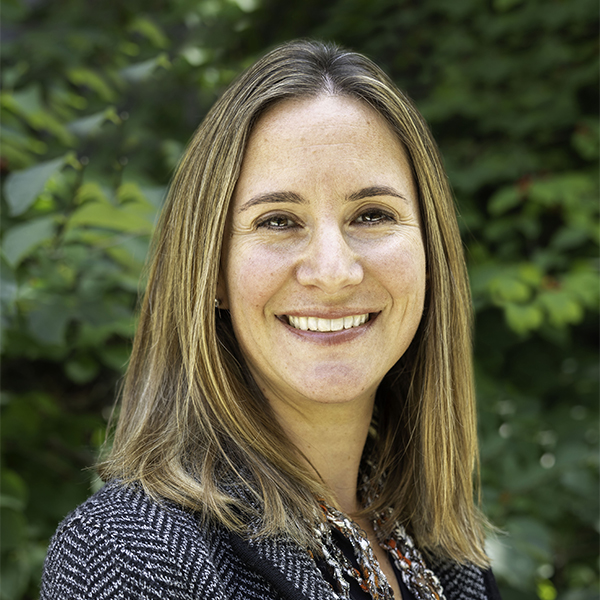
Shoshannah Lenski (MS ’11)
Part of the project involves designing a network geothermal system, which was awarded a DOE grant. Geothermal provides significant energy and greenhouse gas savings and air quality improvements. It will be owned and operated by the city’s SEU, an opt-in supplemental energy utility that will provide 100% renewable energy. Shoshannah Lenski (MS ’11), a SEAS graduate, recently was named its executive director. The SEU will be up and running in 18 months. Stults says that Lenski was the perfect choice, as someone who is from Ann Arbor and is “deeply enmeshed in the values of the city.” She is also focused on sustainability and has vast experience in the strategy and operations of utilities.
Stults says the Bryant project is intended to be a blueprint for other communities in Ann Arbor; Pittsfield Village has been selected as the next neighborhood.
People across the U.S. who live in hurricane-, wildfire- or drought-prone areas may be considering relocating to other places that are perceived as being safer from the effects of climate change. Derek Van Berkel is helping communities plan for climate migration now, so they can be more adaptable and sustainable in the future.
The work of landscape architects in cities is vital to mitigating environmental challenges like the urban heat island effect, stormwater management and ecological restoration. As cities strive to become climate resilient, SEAS landscape architecture faculty and students are focused on finding sustainable solutions that benefit the public.
In two separate but related studies, SEAS research led by Benjamin Goldstein and Joshua Newell underscore how meat connects rural areas where it’s produced to urban areas responsible for most of its consumption. In doing so, the team also revealed how the environmental impacts of meat vary widely across the country.