


 back to all news
SEAS capstone team partners with Native Lands Advocacy Project to create StoryMap focused on U.S. and Tribal water laws
Image

Caption
Photo courtesy of Native Land Information System website.
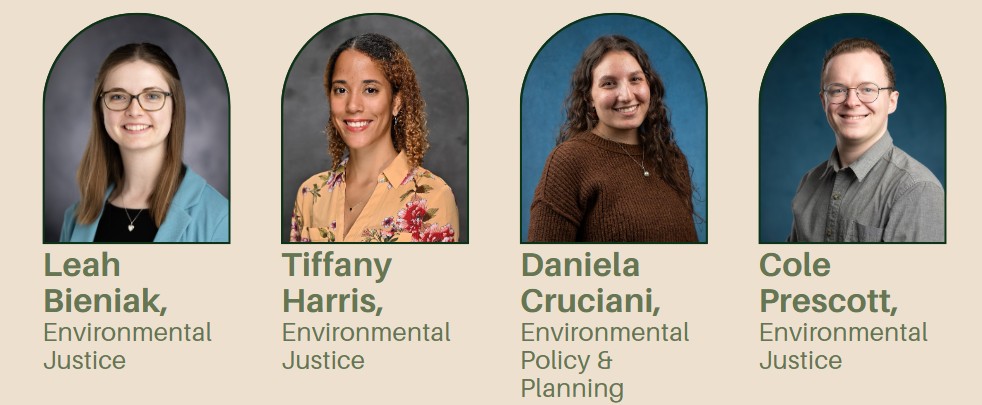
During the 2025-2026 academic year, four University of Michigan School for Environment and Sustainability (SEAS) students were grappling with the impacts of large-scale data about Indigenous Peoples’ lands. Leah Bieniak (MS ’26), Daniela Cruciani (MS ’26), Tiffany Harris (MS ’26) and Cole Prescott (MS ’26) made up one of the teams in the SEAS theme-based master’s project course, Indigenous and Local Community-Led Conservation. Their main project involved writing a report on how the history of land data produced by colonizing nations shaped the perceptions and oppressive treatment of Indigenous Peoples and their territories. Their research addressed how the norms of data production by Western nations have stained even well-intentioned land statistics: data that is meant to promote the prominence of Indigenous Peoples’ knowledge and territories in conservation can still misrepresent a People and their lands, and could even put a community at risk of further exploitation.
An essential question for the capstone team, then, was how could conservation and natural resource professionals produce data about Indigenous lands and waters in ways that were actually beneficial to the communities from which the data came?
One of the team’s advisors and co-author of the paper, SEAS Professor Kyle Whyte, connected the students to the Native Lands Advocacy Project (NLAP). Founded in 2019 under the umbrella of the nonprofit Village Earth, NLAP seeks to challenge data colonialism and design tools that Native Nations need to launch their own initiatives in agriculture, conservation, land rights and more. NLAP staff manage the Native Lands Information System (NLIS), a U.S.-based “repository of learning resources, information and data to help defend and protect Native lands for the benefit of Native Peoples” (NLIS, n.d.). Aude K. Chesnais, director of Village Earth and NLAP, generously offered the students an interview about her organization’s practices and guiding principles for ethical data production that truly serves communities.
As their capstone progressed, the team knew they wanted to create more than an academic paper. One of the hallmarks of the SEAS capstone experience is action: students get to work with real-world clients on tangible deliverables that can help make the world a healthier, safer and more equitable place. NLAP was a shining example of an organization generating products for the betterment of people and the planet, but as a small nonprofit, their efforts are often hindered by capacity and funding. The capstone team and NLAP formed a partnership in which NLAP got extra volunteer support and the students got opportunities to build new skills related to environmental policy and Indigenous land rights.
Creating a resource for navigating water rights
Throughout Summer and Fall 2025, the team built an understanding of the practices and values that help NLAP build trust with their stakeholders. During one of these meetings, the team learned that some of NLAP’s partners had been asking for a resource to help navigate the complexities around water rights. It was an open door, and the capstone team eagerly jumped in.
Water rights for Native Nations could involve any topic related to the legal systems impacting water access and quality on and around reservation lands. The team worked with NLAP to determine what format and scope would make their final deliverable most useful to NLAP’s audience. Then they began their research into the history and present-day status of tribal water rights in the United States.
Months of research, writing and feedback with NLAP coalesced into an ArcGIS StoryMap titled “Understanding the Basics of U.S. and Tribal Water Laws.” A StoryMap is a type of interactive digital presentation that combines many forms of media into a cohesive narrative through which users can scroll and explore. The capstone team’s StoryMap introduces tribal water rights as a matter of justice, overviews major state water law systems, and provides a timeline of key acts and programs that shape tribal-specific water rights. The last section in the StoryMap covers examples of how tribal water rights have been interrupted and how Native Nations have fought to protect their access to and relationships with water. In keeping with NLAP’s mission, the StoryMap’s purpose is to provide Native Nations and their allies with tools that can support their own efforts to protect and reaffirm their rights. The StoryMap became publicly available on the NLIS website in November 2026.
Centering Indigenous sovereignty and self-determination
Chesnais described the collaboration between SEAS and NLAP as a mutual learning opportunity. “As a research hub that seeks to empower tribes…and help them lift historical challenges to sovereign land-planning, we also see transmission and capacity-building as part of our job, which both involves mentoring students and building educational resources. Working with the SEAS students has been fruitful in many regards. I think we all learned in the process; they inherited practical skills to bridge theory with practice, we inherited a very useful resource for tribal water rights, and learned to be more efficient in how we communicate with graduate students on these important issues.”
Through their research and collaboration with NLAP, the capstone team has begun to better understand what it takes to ethically produce data about Indigenous Peoples’ lands and waters. Their key takeaway: center Indigenous sovereignty and self-determination.
“We knew that we had a lot of reflecting and re-working to do to make sure our capstone didn’t perpetuate the harm so often created by non-Indigenous researchers extracting information from Indigenous lands,” explains Bieniak. “As SEAS students, our capstone projects allow us to take a deep-dive into our specific interests and skills. But in working with Native Nations and allied organizations, our project had to be about lending our time and skills to support their goals for self-determination and protecting their rights rather than boosting our academic reputations. That outward focus actually enhanced our growth as students and professionals and made our SEAS capstone experience feel even more valuable.”