• Admissions
  • Exploring Grad School
  • Current Students
  • Community Impact and Engagement
  • Faculty + Staff
  • Alumni
Give
Intranet
Request Info
Home
  • Academics
    • Master of Science
    • Master of Landscape Architecture
    • Doctoral (PhD)
    • Dual-Degree Programs
    • Graduate Certificate Programs
    • Undergraduate Program
    • Courses
    • Online Learning
  • Research + Impact
    • Sustainability Themes
    • PhD Profiles
    • Student Research
    • The Centers, Institutes + Initiatives
    • Faculty Profiles
    • Labs
  • Prospective Students
    • Why Michigan?
    • Application Information
    • International Students
    • Financial Aid + Tuition
    • Visit Campus
    • Faculty Profiles
    • Admitted Students
    • Application Success Webinars
  • Student Services
    • SEAS and PitE Student Center
    • Career Services
    • Financial Aid
    • Academic Advising
    • Student Organizations
    • Student Development
    • Forms, Handbooks + Policies
    • Quick Links
  • News
    • Community Highlights
    • In the Media
    • Stewards Magazine
  • Events
    • Co-Sponsorship Form
    • Submit Event
    • Admissions Webinars
    • Gallery
  • About
    • Who We Are
    • SEAS Values
    • Collective Impact Committee
    • Leadership
    • Demographics
    • Faculty Profiles
    • Administrative Departments + Staff
    • Facilities + Locations
    • Community Impact and Engagement
    • Art & Environment Gallery
    • COVID-19
    • Land Acknowledgement
    • History
    • Email Sign-Up
Search search icon
  • Admissions
  • Exploring Grad School
  • Current Students
  • Community Impact and Engagement
  • Faculty + Staff
  • Alumni
Give
Request Info
search icon Search

Faculty

Faculty Group 2022
  • Academics
  • Research + Impact
  • Prospective Students
  • Student Services
  • News
  • Events
  • About
    • Who We Are
    • SEAS Values
    • Collective Impact Committee
    • Leadership
    • Demographics
    • Faculty Profiles
    • Administrative Departments + Staff
    • Facilities + Locations
    • Community Impact and Engagement
    • Art & Environment Gallery
    • COVID-19
    • Land Acknowledgement
    • History
    • Email Sign-Up
  • Academics
  • Research + Impact
  • Prospective Students
  • Student Services
  • News
  • Events
  • About
    • Who We Are
    • SEAS Values
    • Collective Impact Committee
    • Leadership
    • Demographics
    • Faculty Profiles
    • Administrative Departments + Staff
    • Facilities + Locations
    • Community Impact and Engagement
    • Art & Environment Gallery
    • COVID-19
    • Land Acknowledgement
    • History
    • Email Sign-Up
  1. Home
  2. ›
  3. Research + Impact
  4. ›
  5. Faculty
  6. ›
  7. Brian Weeks
back to all faculty

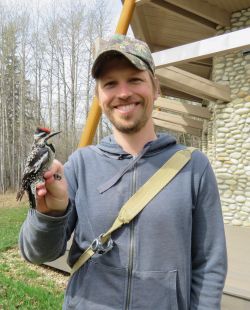
Brian Weeks

Brain Weeks
Associate Professor; Faculty Liaison, Office of Community Impact and Engagement
Ecosystem Science and Management
Conservation + Restoration
[email protected]
Lab website
More information on Brian’s research can be found here

How to Apply to SEAS Graduate Programs

Explore Graduate School

About

Brian Weeks joined SEAS in 2019 and is now an associate professor. He is an evolutionary ecologist who studies how bird species and bird communities have responded to environmental change. He is a museum-, field-, and lab-based biologist with interests ranging from the influence of macroevolutionary processes on the vulnerability of communities in the Solomon Islands to morphological changes over the past 40 years in North American birds. Brian got his PhD in 2017 at Columbia University, where he was also affiliated with the Department of Ornithology at the American Museum of Natural History.

Education

PhD in Ecology, Evolution and Environmental Biology, Columbia University
MA and M.Phil, Columbia University
Affiliated PhD student, American Museum of Natural History in the Department of Ornithology
BA, Brown University

In the News
The skull of a helmet vanga (Euryceros prevostii), a species that lives in Madagascar, shows some of the incredible variation in skeletal form found in birds. More advanced 3D representations of this variation promise to yield new insights into the origins of avian diversity around the world and how it may respond to global environmental change.
December 12, 2025

From Measuring by Hand to AI-Assisted Computer Vision

An AI system called Skelevision is transforming the once laborious process of identifying and measuring bones of bird skeletal specimens into a fully automated process performed by computers. The result is the most extensive dataset of skeletal trait measurements in birds to date.

Summer Mengarelli (MS/MSI ’24): Advancing data sharing and open research practices
October 27, 2025

Summer Mengarelli (MS/MSI ’24): Advancing data sharing and open research practices

Summer Mengarelli (MS/MSI ’24) started at the University of Michigan School of Information (UMSI) in 2021 to become a librarian after working as a student assistant in...

A visual representation of the sampling of avian wing-bone morphology used in the study.
May 23, 2025

AI vision system reveals bird wings evolved for heat regulation, not just flight

Using Skelevision, a new computer vision system, researchers have confirmed that not only do animals in warmer climates have longer limbs, but that the same principle...

An owl outfitted with an archival GPS unit perched on someone's hand.
November 6, 2024

How animal tracking data can help preserve biodiversity

Contact: [email protected] While ecologists have more data than ever to help monitor and understand biodiversity, researchers are still working to understand declining...

Concept illustration of a panoramic view of the mountainous wilderness, with forests, meadows, and a river in the foreground; a cityscape including skyscrapers and modern buildings in the background; various animals like deer, foxes, elk, and birds visible around the landscape; a sunny day; in the style of realistic digital art. Image credit: Nicole Smith, made with Midjourney
August 21, 2024

Human-wildlife overlap expected to increase across more than half of land on Earth by 2070

Contact: [email protected] According to a new University of Michigan School for Environment and Sustainability (SEAS) led study, as the human population grows, it's...

A robin's nest holds a baby and two eggs.
November 27, 2023

How a Warming World Could Affect Bird Development

SEAS master’s student Isaac Smith, who focuses on avian conservation, spent two months at the U-M Biological Station conducting a nest-warming experiment that he hoped would offer additional clues about how birds respond to climate change.

Weeks_birds2
May 8, 2023

Smallest shifting fastest: Bird species body size predicts rate of change in a warming world

Contact: [email protected] ANN ARBOR—Birds across the Americas are getting smaller and longer-winged as the world warms, and the smallest-bodied species are changing the...

Faculty Accolades
November 1, 2022

Faculty Accolades

News and updates about SEAS faculty.

In the Media
December 2, 2023

Wolverines are endangered. A University of Michigan professor explains why (MLive)

Brian Weeks
November 29, 2023

'Canary in the coal mine': Bird populations showing the impact of climate change (Boise State Public Radio)

Brian Weeks
May 9, 2023

Birds wing it in response to climate change (Cosmos)

Brian Weeks
May 8, 2023

Shrinking bodies, growing wings: Climate change having odd effect on birds, study finds (USA Today)

Brian Weeks
May 8, 2023

Bird bodies growing smaller, wingspans longer with climate change (MLive)

Brian Weeks
May 8, 2023

Body sizes and shapes of birds are shrinking as the Earth warms (Earth.com)

Brian Weeks
May 8, 2023

All birds are shrinking — but small birds are shrinking fastest (The Hill)

Brian Weeks
February 7, 2022

Many Birds Are Shrinking and Growing Longer Wings as the World Warms. Why? (Audubon)

Brian Weeks
November 12, 2021

Birds in the Amazon have been shrinking. Here's why scientists think it's happening (NPR)

Brian Weeks
August 12, 2021

Why some animals are shrinking (Vox YouTube channel)

Brian Weeks

Pagination

  • Current page 1
  • Page 2
  • Next page Next ›
  • Last page Last »
seas logo
University of Michigan
School for Environment and Sustainability
Dana Building
440 Church Street
Ann Arbor, MI 48109
(734) 764-6453
Email us
follow us on facebook
follow us on twitter
follow us on instagram
follow us on linkedin
follow us on youtube
follow us on flickr
planet blue global impact logo
  • Contact us
  • Intranet
  • Contact Web Team
  • Email Sign-Up
  • Report Sexual Misconduct

© 2026 The Regents of the University of Michigan | Privacy Policy

Produced by Michigan Creative