


 back to all faculty
Michael Craig
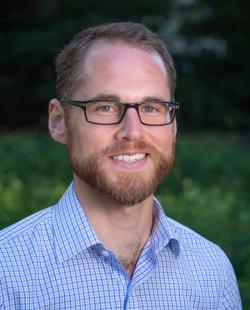
Associate Professor
Joint appointment with Industrial & Operations Engineering (IOE)
Sustainable Systems
Climate + Energy
Cities + Mobility + Built Environment

Office
3010 Dana
Lab website
About
Michael Craig studies how to decarbonize electric power systems in the United States, and how to keep those systems reliable as climate change makes extreme weather worse. His research covers power system planning, operations, and resource adequacy; wind and solar integration; energy storage; electrification; the effects of a changing climate on electricity generation, transmission, distribution, and demand. His ASSET Lab combines capacity expansion and resource adequacy modeling with downscaled climate projections, optimization, ML/AI, and technoeconomic analysis. Utilities and regulators commit to infrastructure that will operate for forty years or more, and most of the tools they use assume the future weather will resemble the past. His work aims to give planners, regulators, and system operators a clearer picture of the risks that assumption hides, and of which decarbonization pathways hold up when it fails.
Michael Craig is an Associate Professor jointly appointed between the School for Environment and Sustainability and the Department of Industrial and Operations Engineering at the University of Michigan. He has received funding from several federal agencies, including an NSF CAREER Award, and serves on the advisory committees of several climate adaptation initiatives led by industry and national labs. His lab's research has been published in Nature Energy, Nature Climate Change, Joule, and other leading journals. He previously worked as a Research Engineer at the National Renewable Energy Laboratory and received his PhD in Engineering and Public Policy from Carnegie Mellon University in 2017.
Publications
Google Scholar pageResearch
Adapting energy systems to climate change; decarbonization of energy systems; power system optimization; policy analysis; resource adequacy and risk analysis.
Education
PhD, Engineering and Public Policy, Carnegie Mellon University (2017)
MS, Technology and Policy Program, Massachusetts Institute of Technology (2014)
BA, Environmental Studies (Ecology), Washington University in St. Louis (2010)
In the News


In the Media