
A California Department of Forestry and Fire Protection crew work during the Palisades Fire that started in the City of Los Angeles in January 2025. Image credit: Cal Fire

Tackling the Wildfire Problem Using a Holistic Approach

Wildfires have become an increasingly severe and frequent threat across the U.S. and around the globe. Fueled by rising temperatures and prolonged droughts caused by climate change, as well as human activity, wildfires now burn with greater intensity and for longer durations, devastating forests, destroying homes and endangering lives.

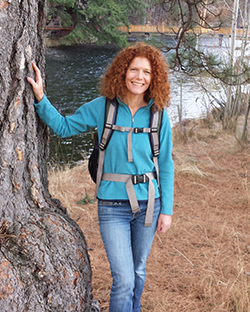
As climate change accelerates, addressing the root causes of wildfires and improving wildfire management strategies is critical, says Paige Fischer, an associate professor at the University of Michigan School for Environment and Sustainability (SEAS) who studies wildfires and their effects on humans.

Paige Fischer
Paige Fischer

While some solutions focus on forest management, fire suppression or land-use planning, SEAS is approaching the wildfire issue differently through its Berman Western Forest and Fire Initiative (WFFI).

WFFI is unique, says Fischer, its principal investigator, because it studies the wildfire problem through a holistic lens that includes ecological, social, technical, behavioral and policy perspectives, which are interdependent and contribute to the complexity of the Western wildfire crisis. The goal is to develop policy and management interventions that can mitigate the risk of wildfires and help communities better respond to them.

“We are conceptualizing wildfires as a complex system to help us understand why, despite all of our efforts, the wildfire problem keeps getting worse,” says Fischer. “We’re trying to identify intervention points where we might set society on a path toward adapting to climate change and increasing wildfire risk rather than constantly experiencing these repeated cycles of preparedness, disaster and recovery.”

While the number of active wildfires in the United States at any given time varies, the total number of wildfires reported in a year averages around 70,000, according to the National Interagency Fire Center. These numbers fluctuate significantly based on factors like geography, weather and the overall fire season.

At WFFI, which was established in 2021 with a philanthropic gift from Steve (BS ’76) and Kathy Berman, Fischer works with an interdisciplinary working group of U-M faculty, graduate students and postdoctoral researchers whose fields include ecology, engineering, nursing, economics, behavioral science and policy.

We’re trying to identify intervention points where we might set society on a path toward adapting to climate change and increasing wildfire risk rather than constantly experiencing these repeated cycles of preparedness, disaster and recovery.”

Through applied research, they focus on understanding how people perceive and respond to wildfire risks and provide information and tools that can be used by forest managers, land-use planners, policy makers and other wildfire practitioners “to have an impact on wildfires in their communities,” says Fischer. “Part of that is trying to better understand the process of how people think long-term about extreme events that are unlikely but have the highest consequence, and what encourages them to do more to protect themselves from them.”

A key focus of WFFI is its training of the next generation of wildfire scholars who are fluent in systems thinking and transdisciplinary methods, Fisher says, and can address the wildfire problem holistically.

WFFI’s Projects

WFFI currently has 13 ongoing research projects, each with a different focus and deliverable. Projects are designed in collaboration with the wildfire stakeholders that WFFI partners with to ensure that the research outcomes are beneficial for the communities they are serving.

Healthcare for Fire and Smoke Readiness, for instance, focuses on creating an emergency preparedness plan and guidelines for nursing homes and long-term healthcare facilities whose residents may need to be evacuated because of a wildfire but aren’t mobile.

Another project, Microgrids for Community Wildfire Resilience, combines urban planning and grid modeling to help communities identify areas most suitable for microgrids, which can enable them to maintain power access after outages caused by fires and other natural disasters.

And yet another project, one of two funded by NASA grants totaling more than $2 million, examines how people perceive the risks of extreme wildfire smoke and protect themselves from its toxic effects. Survey results will be shared with health care providers and community organizations to develop policy and programmatic interventions that people could adopt to keep themselves safe from wildfire smoke.

As the wildfire problem continues to worsen, Fischer says there is the potential for knowledge gaps to emerge that WFFI could address. Referencing the deadly wildfires that raged through Southern California in January 2025, Fischer says it may be useful to study the flammability of structures in urban areas.

“A big piece of the Los Angeles fires is that people and businesses were located in a very fire-prone area,” says Fischer. “I think we need a better understanding of how to make fire-resistant structures in the rebuilding process. What kinds of structures could we build that make sense? Even though WFFI isn’t researching zoning and building codes and regulations, there’s a technical piece of information, a knowledge gap, that we could help alleviate through our research.”