



The 2026 Summer Faculty Masterclass and Student Experience Workshop schedule is now live. These sessions offer an opportunity to engage with SEAS faculty expertise, explore timely and consequential topics in the field, and connect with key resources across the University of Michigan community as you prepare to begin your SEAS experience.
June 2026
EJ Fundamentals: Revisiting Justice Principles
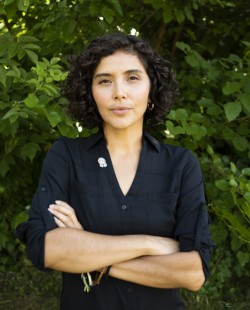
Wednesday, June 24th @ 10:00am EST
Presenter: Michelle Martinez - Director of the Tishman Center for Social Justice and the Environment
Soon you will be a Master of Environmental Justice. This means, you will be learning complex ideas that live in contradistinction to one another. And as a professional, required to use your translational skills and adaptive leadership to 'read the world' in order to change their outcomes, bend the arc of justice. In doing so, we will seek to visit the foundational understandings of environmental justice: recognitional justice, procedural justice, distributive justice, transformative justice. This may be a refresher course, or, it may be the first time you've heard these terms. All are welcome to be on this learning journey together.
Scaling up Indigenous Peoples' Actions for Conservation, Climate Mitigation and Food Sovereignty
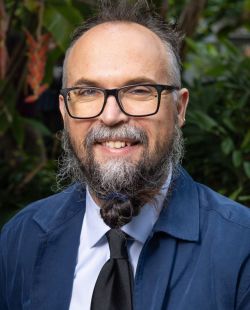
Thursday, June 25th @ 3:30pm ET
Presenter: Professor Kyle Whyte
The potential global scale of Indigenous peoples ecological stewardship continues to emerge as a source of inspiration and as an effective lever for environmental protection. But many people are not aware of the potential for scale that Indigenous practices have for driving transformation. The masterclass offers an introductory primer for how Indigenous scale work, and will discuss some cases at the intersection of conservation, climate change, and food systems.
July 2026
State Climate Action in Michigan: Funding, Financing, and Policy
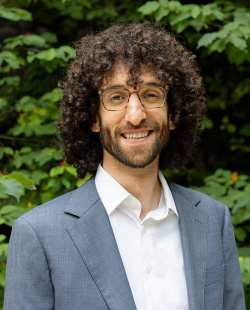
Tuesday, July 14th @ 11:00am ET
Presenter: Associate Professor Sam Stolper
Associate Professor Sam Stolper will share insights and lessons from his experience serving on Michigan's advisory Council on Climate Solutions as well as advising a student master's project focused on funding and financing the implementation of the MI Healthy Climate Plan.
August 2026
Machine Learning in Earth System Science Research
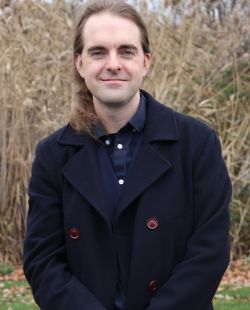
Thursday, August 20th @ 11:00am EST
Presenter: Dani Jones - Research Faculty
This masterclass offers an introduction to the growing role of machine learning in studying interconnected Earth systems, with a focus on oceanic, atmospheric, and cryospheric processes. We’ll look at how ML can support scientific research through techniques like gap-filling, sensor placement, forecasting, and unsupervised classification, while also considering the importance of domain knowledge and physical context. Students will gain familiarity with key approaches, assumptions, and current research directions.
Open and Reproducible Research for the Environmental Sciences
New Date
Thursday, August, 20th @ 1:00pm ET
Presenter: Dani Jones - Research Faculty
Open research makes data, code, and publications accessible and reusable, supporting reproducibility, collaboration, and broader impact. This skills-focused workshop will help SEAS students understand open research practices and apply them to environmental science projects.
Students will learn the basics of computational reproducibility, explore tools for managing data and sharing code, and practice clear documentation and project organization strategies. By the end, students will be prepared to use reproducible workflows that support open, trusted, and collaborative research.