


Welcome to the IGCB
A Nexus for Interdisciplinary Global Change Research
Global change is disrupting organisms and ecosystems globally. Drivers of change include climate change, biodiversity loss, pollution, biotic exchange (novel pathogens, pests), land use, and more. We see these impacting our forests, croplands, lakes and rivers, oceans, coastlines, and cities.
Impacts on people and nature are, and will be, staggering—now and within the next decade—not the end of the century, as previously predicted.

Hello and welcome to the IGCB home page! We have launched several initiatives (e.g., faculty hires, postdoc opportunities, PhD Fellowships, research themes and associated projects involving research among multiple Michigan groups and with outside collaborators, an Exchange Fellows program, a seminar series and several symposia), that you can learn about from the links below. We are excited about the community we are building to help advance science, train the next generation of global change scholars, and find solutions to our global crises. Our web site is constantly under reconstruction, so expect to see more soon illustrating who we are and the work we are doing. Feel free to contact me directly ([email protected]) if you’d like to learn more.
- Peter Reich, IGCB Director
What's Going On at the IGCB?
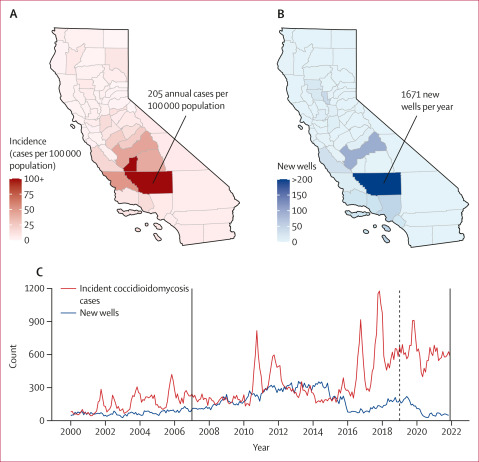
IGCB Affiliates Publish Paper on the Impacts of Oil and Gas Development on Valley Fever Risk
- IGCB Affiliate Faculty members Jennifer Head and Lisa Couper recently published, "Oil and gas well development and coccidioidomycosis risk in Kern County, CA, USA: a case-crossover study" in The Lancet Planetary Health.
IGCB Graduate Fellow Publishes Paper on Fungi Beneath the Great Lakes
-
Supported by IGCB funding, Quinn Moon and mentor, Timothy James, recently published "Deep subsurface organic-rich shale supports abundant, diverse, and novel fungi" in The ISME Journal.
-
Additional information can be found in the following press releases: Discover Wildlife, earth.com, Popular Science, and Vice
Institute for Global Change Biology: Call for Postdoctoral Fellows
-
The IGCB is seeking another round of exceptional applicants for the IGCB Michigan Postdoctoral Fellows Program (application deadline 9/30/26) and a selection of Global Synthesis Working Group research fellows (review begins 9/1/26). Please see Postdoc Opportunities for more information on each.
The IGCB's Mission
We seek to enhance understanding of critical knowledge gaps and learn how to do science that has an impact (i.e. help find solutions to our climate and sustainability crises). Our overall research focus is on the interaction of the four main drivers of global environmental change (climate change, biodiversity loss and biotic invasion, land use and transformation, eutrophication) with key natural and human systems and processes.
The IGCB currently focuses on six research areas or themes to meet four interwoven goals; and views these as our current priorities.
In focusing on the research themes (linked below), we aim to advance our mission and meet our goals:
I. Build community and critical mass
II. Train the current and next generation of global change scholars
III. Do good science
IV. Help find solutions to our global crises
Research Themes:


IGCB Contact Information


Looking to reserve an IGCB space?