
  • Admissions
  • Exploring Grad School
  • Current Students
  • Community Impact and Engagement
  • Faculty + Staff
  • Alumni
Give
Intranet
Request Info
Home
  • Academics
    • Master of Science
    • Master of Landscape Architecture
    • Doctoral (PhD)
    • Dual-Degree Programs
    • Graduate Certificate Programs
    • Undergraduate Program
    • Courses
    • Online Learning
  • Research + Impact
    • Sustainability Themes
    • PhD Profiles
    • Student Research
    • The Centers, Institutes + Initiatives
    • Faculty Profiles
    • Labs
  • Prospective Students
    • Why Michigan?
    • Application Information
    • International Students
    • Financial Aid + Tuition
    • Visit Campus
    • Faculty Profiles
    • Admitted Students
    • Application Success Webinars
  • Student Services
    • SEAS and PitE Student Center
    • Career Services
    • Financial Aid
    • Academic Advising
    • Student Organizations
    • Student Development
    • Forms, Handbooks + Policies
    • Quick Links
  • News
    • Community Highlights
    • In the Media
    • Stewards Magazine
  • Events
    • Co-Sponsorship Form
    • Submit Event
    • Admissions Webinars
    • Gallery
  • About
    • Who We Are
    • SEAS Values
    • Collective Impact Committee
    • Leadership
    • Demographics
    • Faculty Profiles
    • Administrative Departments + Staff
    • Facilities + Locations
    • Community Impact and Engagement
    • Art & Environment Gallery
    • COVID-19
    • Land Acknowledgement
    • History
    • Email Sign-Up
Search search icon
  • Admissions
  • Exploring Grad School
  • Current Students
  • Community Impact and Engagement
  • Faculty + Staff
  • Alumni
Give
Request Info
search icon Search
Institute for Global Change Biology
  • Overview
  • Who We Are
  • What We Do
  • Training Opportunities
  • Research
  • Engage With Us
  • Exchange Program
  • Faculty Hiring
  • Graduate Students
  • Postdoc Opportunities
  • Call for Working Group Proposals
  • News & Events
  • Publications
  • Overview
  • Who We Are
  • What We Do
  • Training Opportunities
  • Research
  • Engage With Us
  • Exchange Program
  • Faculty Hiring
  • Graduate Students
  • Postdoc Opportunities
  • Call for Working Group Proposals
  • News & Events
  • Publications
  1. Home
  2. ›
  3. Welcome To The Institute For Global Change Biology
  4. ›
  5. Publications
  6. ›
  7. The Importance of Old Trees

The Importance of Old Trees

Tsun Fung Au et al., 2022

https://doi.org/10.1038/s41558-022-01528-w


Reforestation is recognized as a nature-based solution to mitigate climate change, but a new study led by IGCB’s Tsun Fung Au with an international team of global change scientists suggested that a top priority should be given to conservation of existing old trees for their exceptional resistance to drought and long-term residence time of atmospheric carbon dioxide captured several hundreds to thousands of years ago.Trees
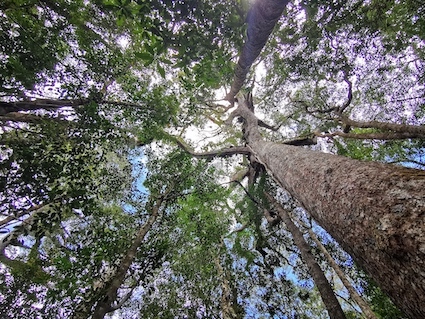
Global forests are dominated by younger trees due to ongoing widespread deforestation, compounded with natural regeneration and human reforestation effort. While heat-induced droughts have become more frequent and intense, it poses a daunting threat on these younger trees that have increasingly important roles in carbon cycling and ecosystem

functions. Therefore, it is imperative to understand how the younger trees respond to drought comparing to the older one.

The study analyzed over 20,000 trees across five continents, with a primary focus on trees from the upper canopy as these trees have stronger carbon sequestration ability and provide fundamental ecosystem services such as microclimate buffering and habitat provision to other organisms than forest components.Trees
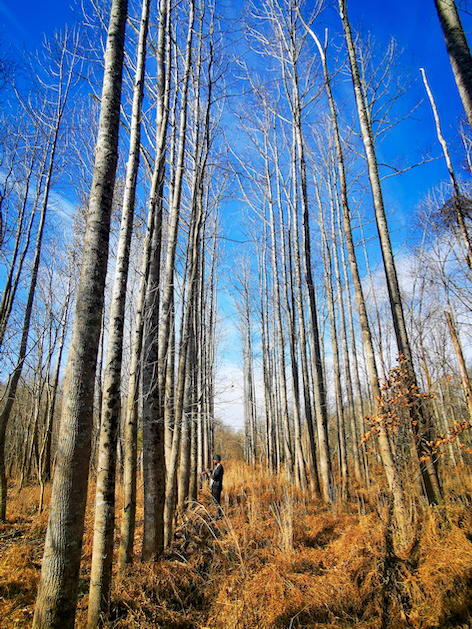
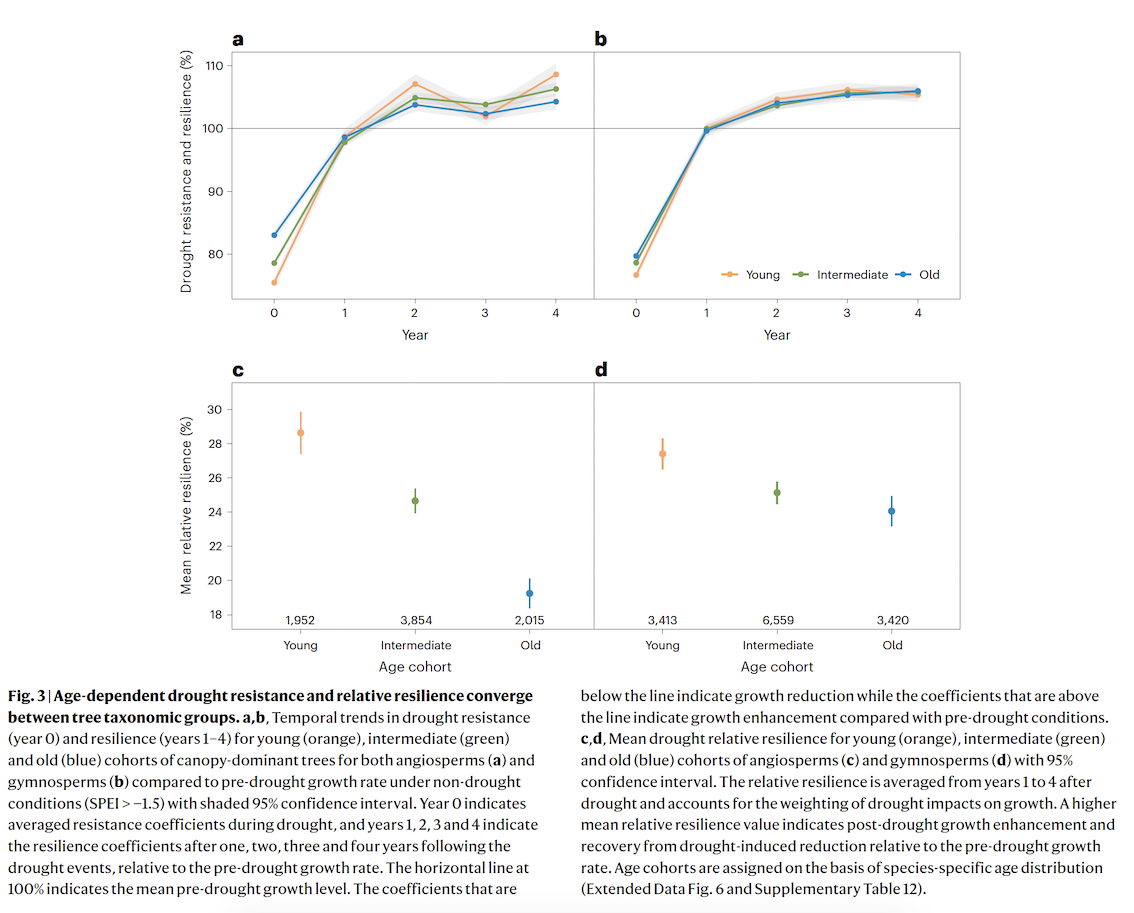
During mild droughts, young hardwoods from the upper canopy layer experienced a 28% growth reduction, compared to a 21% reduction for their oldest relatives. The difference could amplify to 17% during extreme drought. Young conifers were also less resistant to drought (27% growth reduction) than the eldest and the difference between young and old conifers was 2.5%. On the other hand, young trees were more resilient to drought with greater ability to recover from drought than older trees, which could contribute to better carbon sequestration in the long run. The findings suggests that it is important to consider forest age as an aspect of climate change mitigation, such that a mixture of old and young trees in a forest is essential to cope with the short-term and long-term impacts of drought.Trees
seas logo
University of Michigan
School for Environment and Sustainability
Dana Building
440 Church Street
Ann Arbor, MI 48109
(734) 764-6453
Email us
follow us on facebook
follow us on twitter
follow us on instagram
follow us on linkedin
follow us on youtube
follow us on flickr
planet blue global impact logo
  • Contact us
  • Intranet
  • Contact Web Team
  • Email Sign-Up
  • Report Sexual Misconduct

© 2026 The Regents of the University of Michigan | Privacy Policy

Produced by Michigan Creative