


 back to all news
U-M Climate Week features PBS’ “50 States of Sustainability” screening and solutions panel
Image

The University of Michigan's second annual Climate Week featured a screening of Episode #101 of “50 States of Sustainability,” a PBS series that highlights people and communities across the country that are developing practical solutions to environmental challenges.
The episode brings together three compelling stories: a solar farm that produces renewable energy and food through agrivoltaics; the founder of the Rocky Mountain Institute reflecting on the critical role of energy efficiency; and an 11-year-old beekeeper making the case for protecting bees and pollinators.
Following the screening, a diverse panel explored the connections between clean energy, agriculture, land use, energy efficiency and biodiversity.
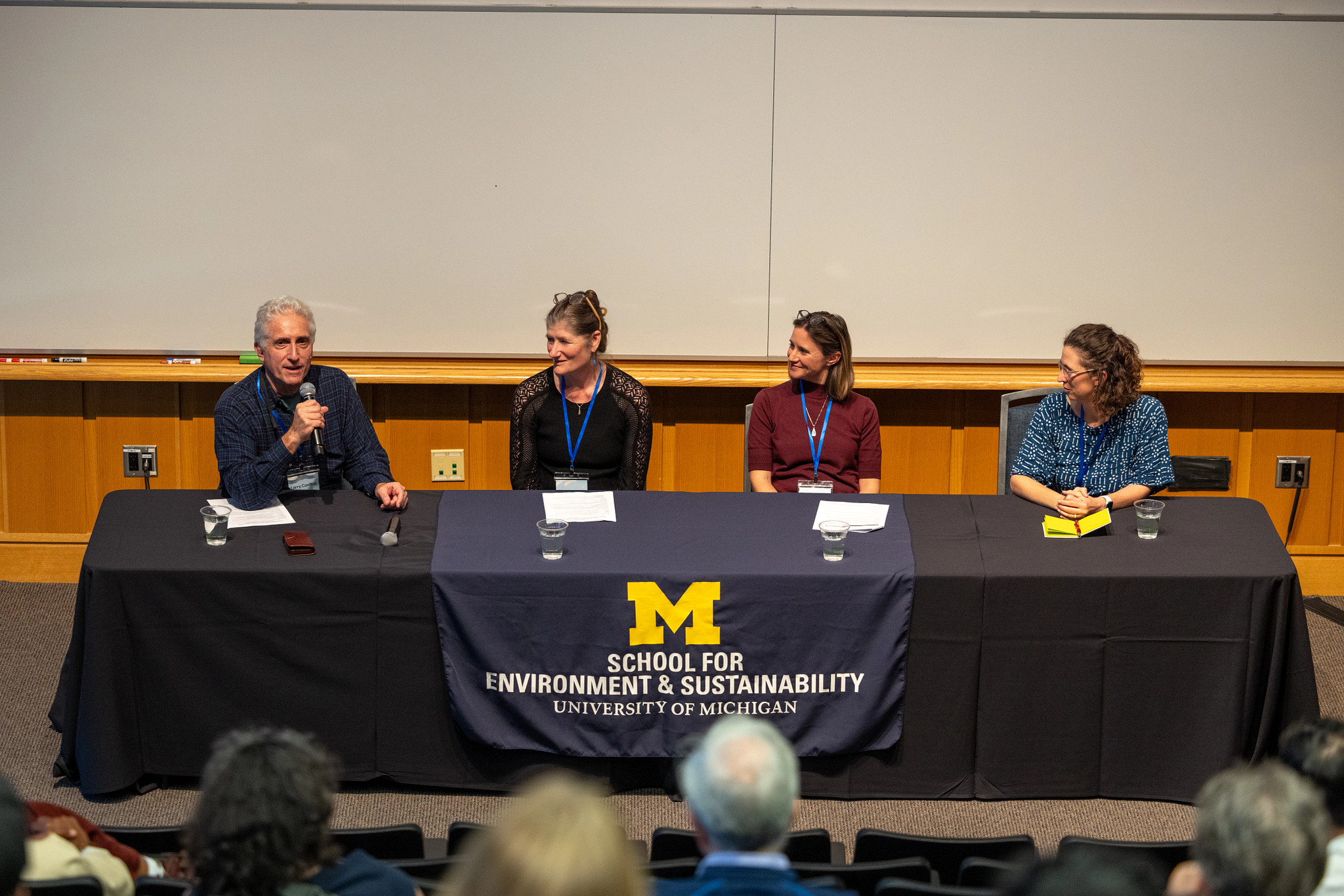
Panelists included, from left: Larry Confino, producer/director at Media Sector Inc.; Shana Weber, U-M inaugural associate vice president for campus sustainability and innovation; Shoshannah Lenski (MS ’11),, executive director of the Ann Arbor Sustainable Energy Utility; and Amanda Edmonds (MS ’05), lecturer III in U-M’s Program in the Environment and faculty lead for the Sustainable Food Systems Initiative.
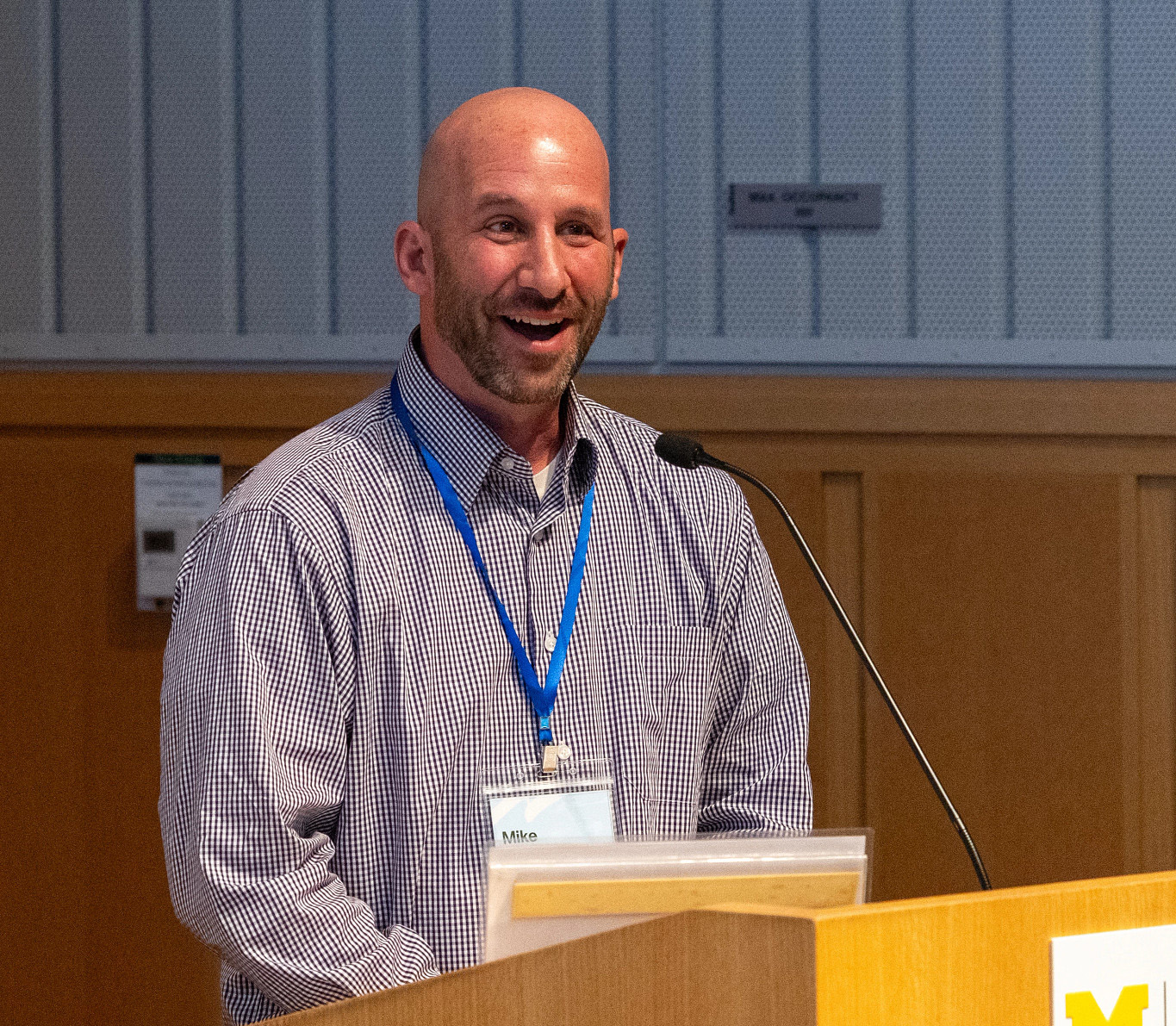
The discussion was moderated by Mike Shriberg (MS ’00, PhD ’02), SEAS professor of practice and engagement and director of the Michigan Water Center.
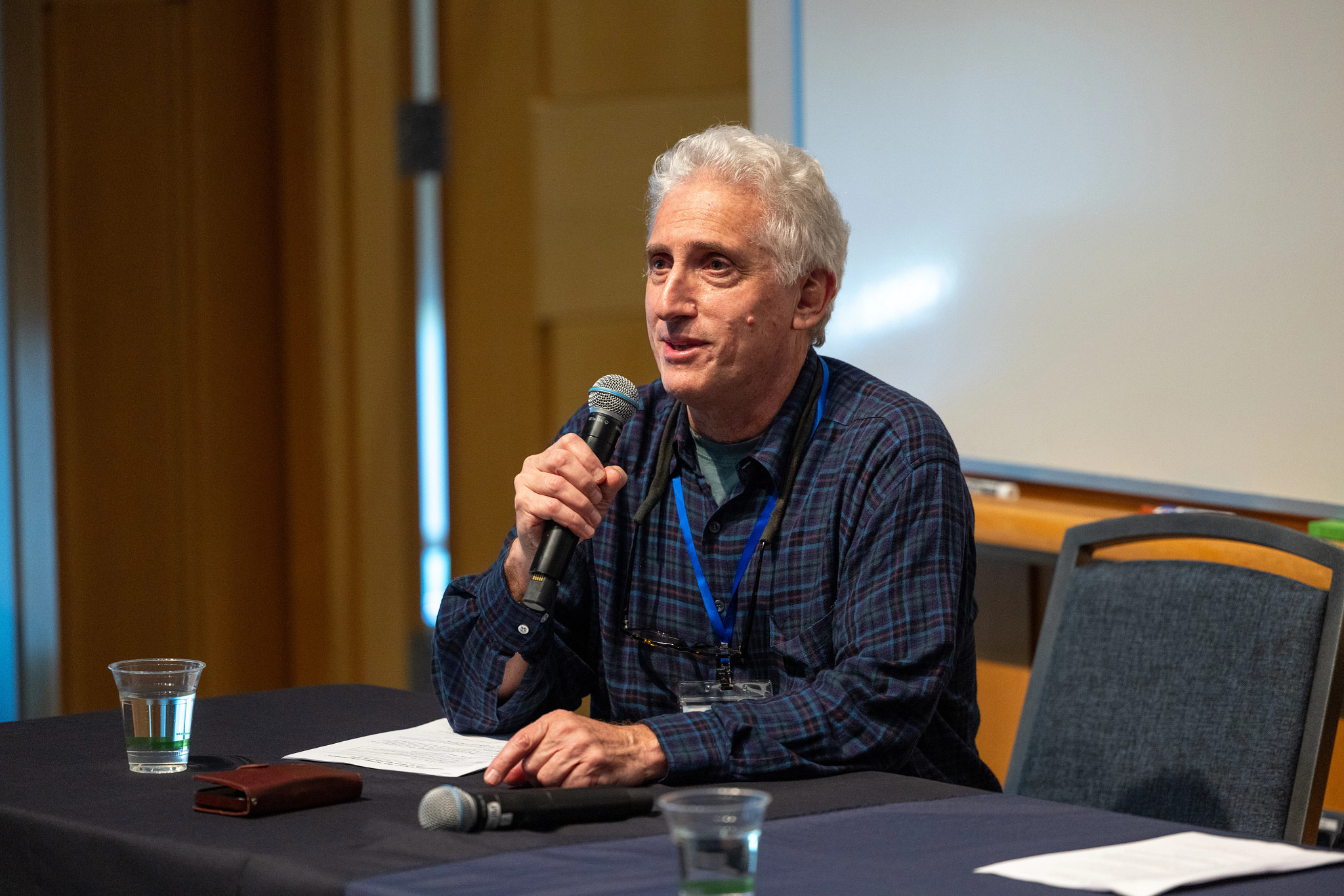
“I’ve been a filmmaker my whole career. It felt right to me to pivot to something that I care about that is hopefully making my kids’ lives better and everybody’s lives slightly better,” said Confino about his motivation for making “50 States of Sustainability. “So, we embarked on this idea of telling stories across the country because we want to show that there is innovation happening everywhere that we’re just not hearing about. So that’s really the goal of the series: to shine a light on the good work and innovation that people are doing.”
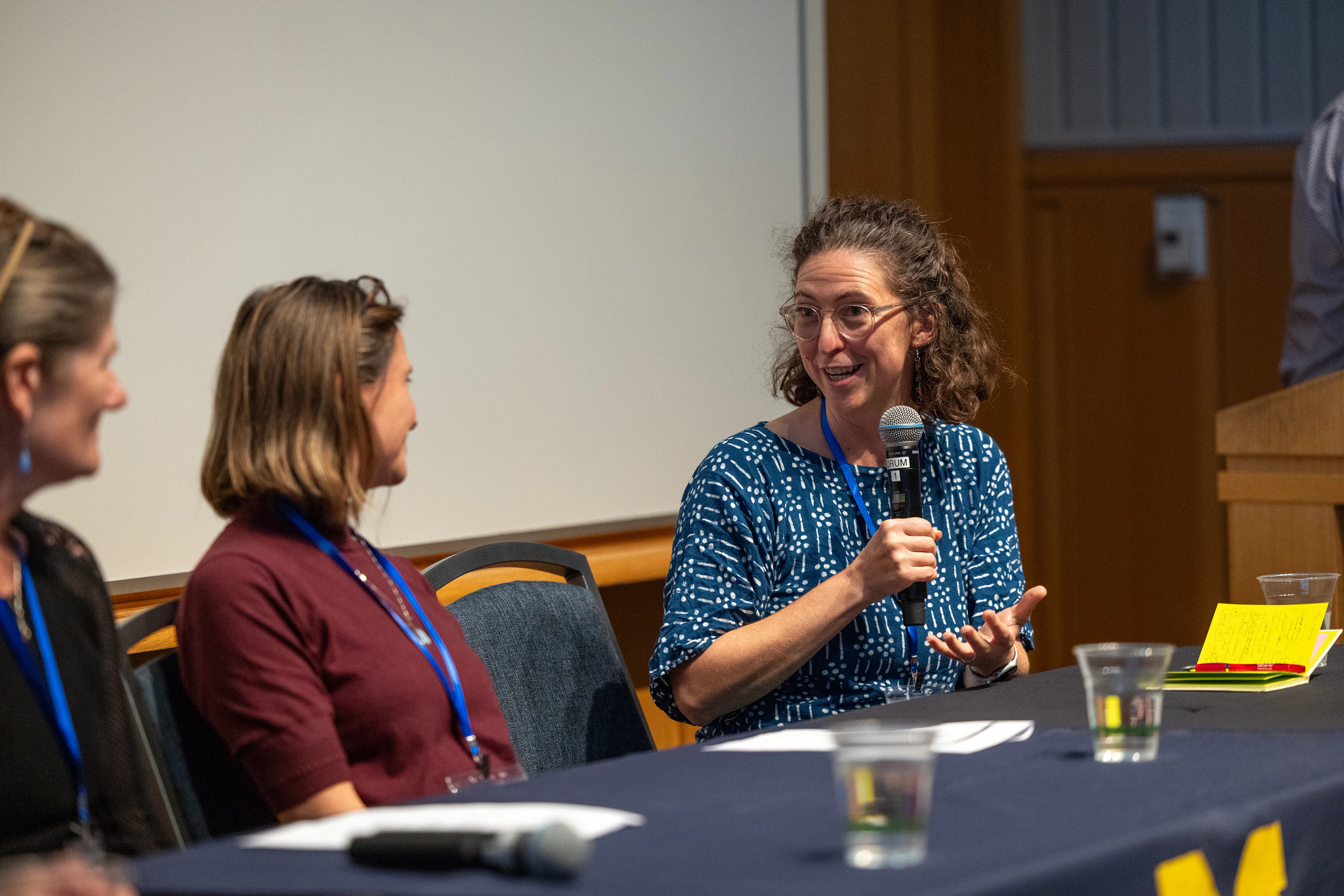
The speakers discussed the stories they watched in the “50 States of Sustainability” film and connected them to their own work. Edmonds, whose expertise is in food systems, talked about educating people about sustainability issues and getting them to act. “To me, the way towards behavior change is understanding where someone is coming from, understanding what you’re trying to do and finding that middle point,” said Edmonds. “What is the pain point for people in the world and how do you connect what you’re wanting to communicate or do to their pain points?”