


Student Opportunities with the Clinic 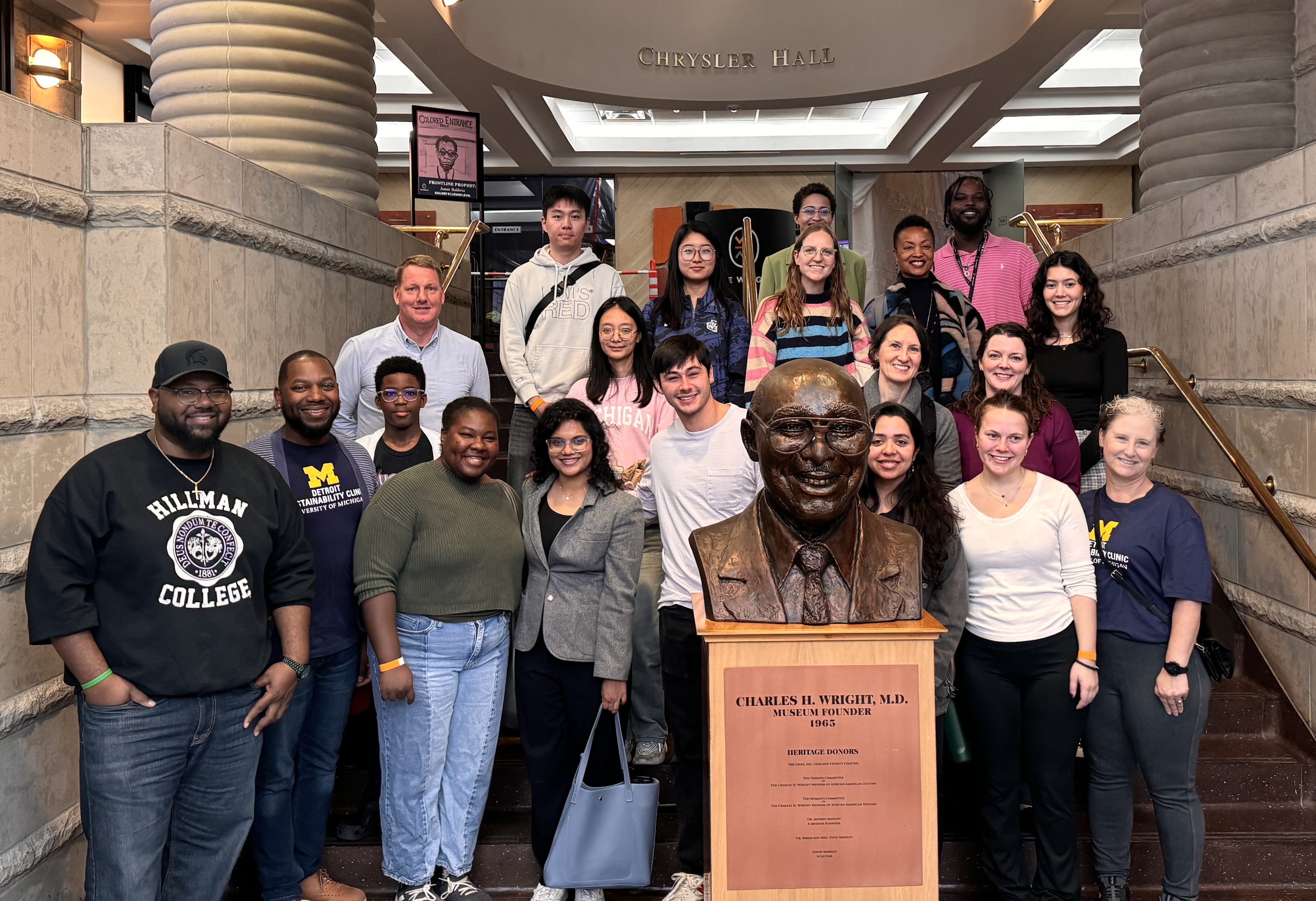
The Clinic offers University of Michigan School for Environment and Sustainability (SEAS) students real-world opportunities to apply what they learn in the classroom to solving pressing sustainability challenges, while working directly with community partners, faculty, and practitioners in Detroit and its surrounding areas.
Three Ways to Engage
- Master's Capstone Projects
- Community Resilience Projects
- Sustainability Assistance Projects
- Sustainability Helpdesk (more info coming soon)
Master's Capstone Projects
Most SEAS students fulfill their graduation requirement through a Master’s Capstone project, which involves an interdisciplinary team working with a real-world client for approximately 18 months. These projects give students hands-on experience in project management, budgeting, stakeholder engagement, and professional collaboration. All Clinic-supported capstone projects are rooted in Metro Detroit and are co-developed with clients, faculty advisors, and the Clinic to ensure they meet both community needs and student learning goals.
Community Resilience and Sustainability Assistance Projects
In addition to Capstones, the Clinic supports a range of short- and mid-term projects for students, including paid internships, research roles, and summer opportunities, through its Community Resilience and Sustainability Assistance Projects. These faculty-advised projects provide students with flexible opportunities to support local organizations and city departments on a rolling basis.
Get Involved
- If you’re interested in working with the Clinic, learning more, or proposing a project, please fill out our Intake Form (Students are welcome to submit projects for their organizations, and we’re currently accepting partnership requests for Summer/Fall 2026!).
- Sign up for our Clinic Quarterly eNewsletter to be the first to hear about student opportunities, upcoming events, and clinic updates.
- Explore Clinic student job opportunities on the SEAS Careers Page
FAQs
How do clinic projects differ from SEAS master’s projects?
The most in-depth Clinic Project is the Master’s Capstone Project, where interdisciplinary teams of SEAS students work for 18 months with a Detroit-based client to co-develop strategic solutions to complex environmental issues. These projects fulfill the SEAS capstone graduation requirement and offer experience in project management, stakeholder engagement, and applied research. In addition to capstones, the Clinic offers two other projects for students to get involved with: Community Resilience Projects and Sustainability Assistance. Community Resilience Projects are shorter-term (up to 12 months), faculty-advised opportunities such as paid internships, summer practica, and research. Sustainability Assistance Projects are rapid-response support to community organizations or local agencies. These are short-term projects (up to 100 hours) that allow students to apply research, analysis, and technical expertise in a flexible project design.
Are there classes that have a specific tie-in with the Clinic that I should be aware of?
Going forward, the Clinic will coordinate directly to provide workshops both within SEAS and incorporating interdisciplinary opportunities across the University.
How do I best network with or access the Clinic partner individuals and organizations, such as in my research or career development?
There will be mentorship and programming opportunities for students that will be developed in partnership with the SEAS Student Center and Detroit community organizations. These kinds of opportunities will be designed to foster networking and promote thoughtful conversations between students, organizations, and Clinic partner individuals.
Are there other ways I can enhance my U-M/SEAS curriculum with the Clinic?
Yes, through real-world experiences, hands-on professional training and the specific skills needed to interact most effectively with underserved communities. The goal of the Clinic is to provide multiple ways to deliver capacity based on client needs, so additional opportunities will be established in the future.