Biodiversity of soil fungi
Wenqi Luo is currently working on the species-area relationship of fungal species using the National Ecological Observatory Network (NEON) and the Dimensions of Biodiversity of Soil Fungi (DoB) data that together encompass 113 terrestrial sites across North America. This is a collaborative project between the Zhu lab at the University of Michigan and the Peay lab at Sandford. In this project, Wenqi and his collaborators will investigate how species accumulate as the increase of sampling area at the site level with a power-law model: S = C.Az, where S indicates the number of species encountered, A is the area sampled, C is an empirical constant, and z indicates the rate at which species increase as increasing sampling area. 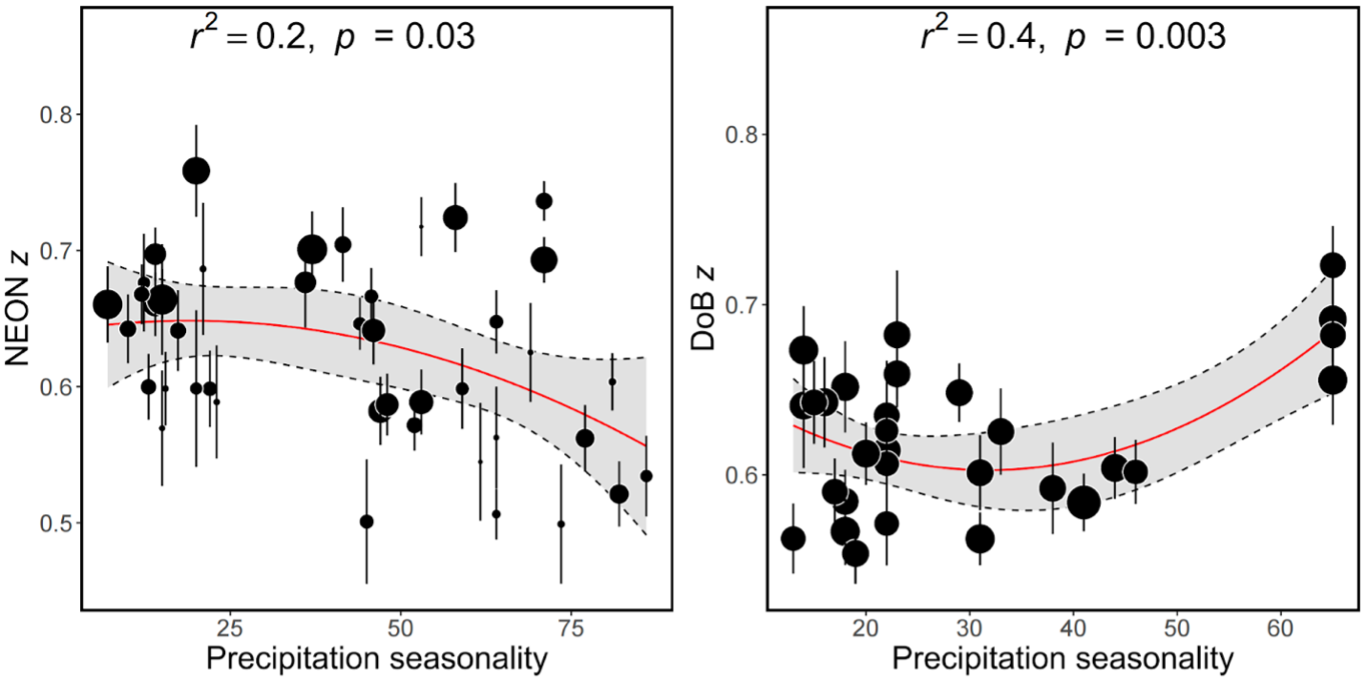
Figure 1 The relationship between the z values and climate variables for the NEON and DoB sites.
The smaller the z value, the less will be the increase in the number of fungal taxa as increasing area and hence a lower species turnover rate. The estimated z values will then be modeled as functions of functional guilds (e.g., mycorrhizal types), soil depth, and climate variables. The novelty of using the z value, rather than the more conventional dissimilarity index such as beta diversity to quantify species turnover, lies in that the z value can potentially be used to estimate the rate of species loss resulting from habitat loss in conjunction with climate change.
Wenqi’s analysis so far has generated three preliminary results: (1) When all fungal species were included in the analysis, the site-level species turnover rate (estimated as the z value) was mainly driven by the seasonality of precipitation and soil pH (Figure 1); (2) Different functional guilds differed in their z values as well as the underlying environmental factors that drive their z variations (Figure 2). Projecting z values based on precipitation seasonality-driven distribution models suggest faster species turnover under the scenarios of RCP8.5 (high CO2 emission; Figure 3) across Norther America. These findings highlight how potential climate change may affect microbial redistributions and therefore ecosystem functions at the continental scale.Wenqi Luo is currently working on the species-area relationship of fungal species using the National Ecological Observatory Network (NEON) and the Dimensions of Biodiversity of Soil Fungi (DoB) data that together encompass 113 terrestrial sites across North America. 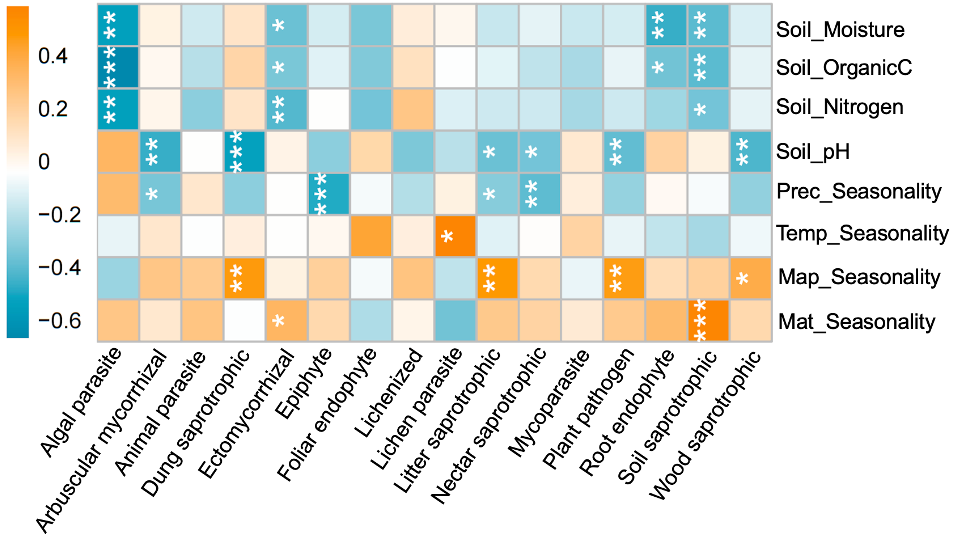
Figure 2 The relationship between the z values and climate and soil variables for 16 common functional guilds. Figure 2 The relationship between the z values and climate and soil variables for 16 common functional guilds. 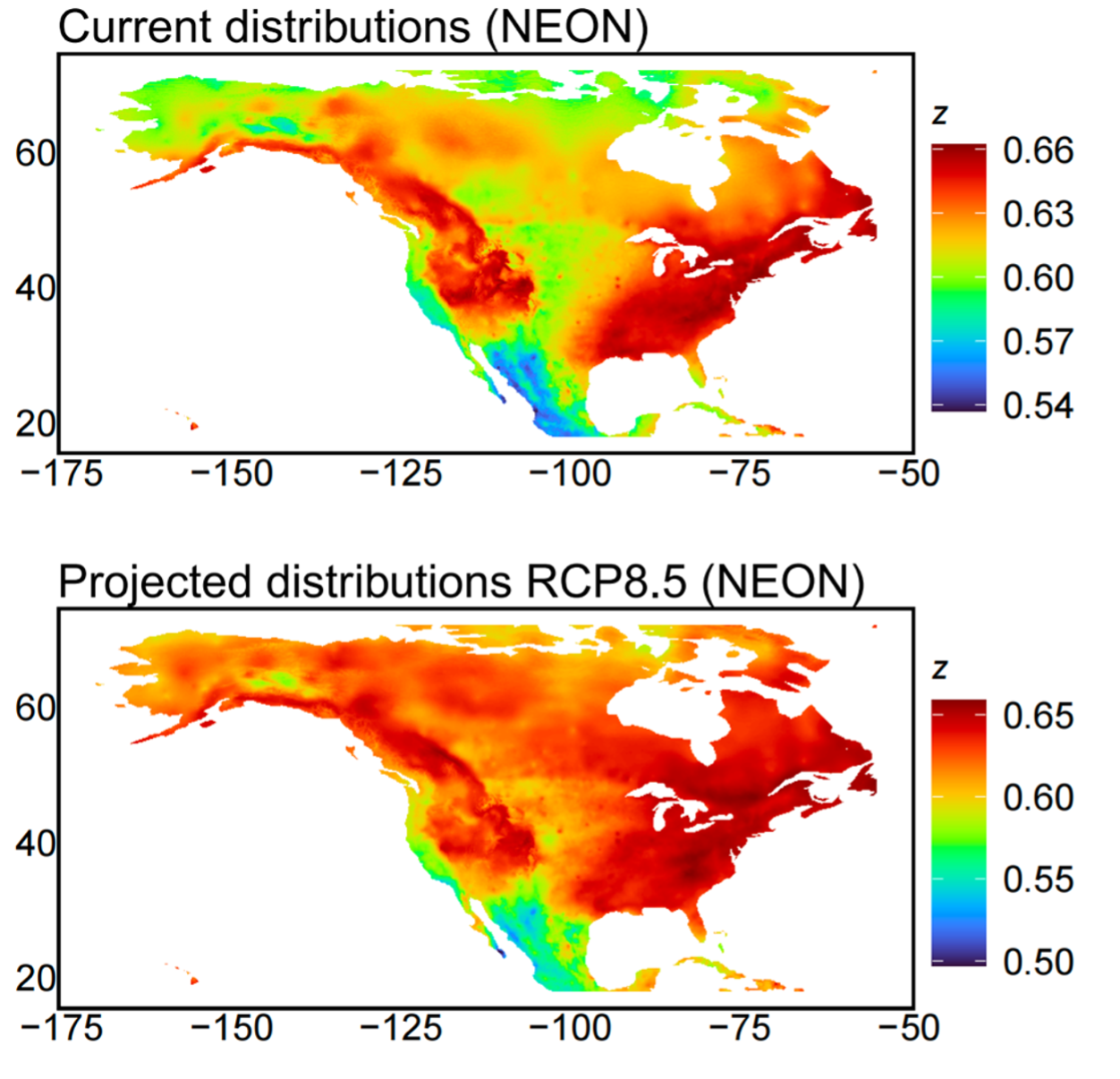
Figure 3 The projection of the z values across North America based on 43 NEON sites.
The model involved in the projections included precipitation seasonality as the only explanatory variable. The future climate scenario is RCP 8.5. Projecting z values based on precipitation seasonality-driven distribution models suggest faster species turnover under the scenarios of RCP8.5 (high CO2 emission; Figure 3) across Norther America. These findings highlight how potential climate change may affect microbial redistributions and therefore ecosystem functions at the continental scale.
Researchers involved:


Kai Zhu
Associate Professor of Geospatial Data Sciences and Ecosystem Science and Management